Hygienic design
Define the required product-contact finish, dismantling, wash procedure, drainage and documentation rather than relying on a generic “food-grade” label.

Bottle filling applications
Food and drink filling projects must balance product behaviour, hygienic product contact, clean-down, recipe changeover and the presentation of the finished bottle.
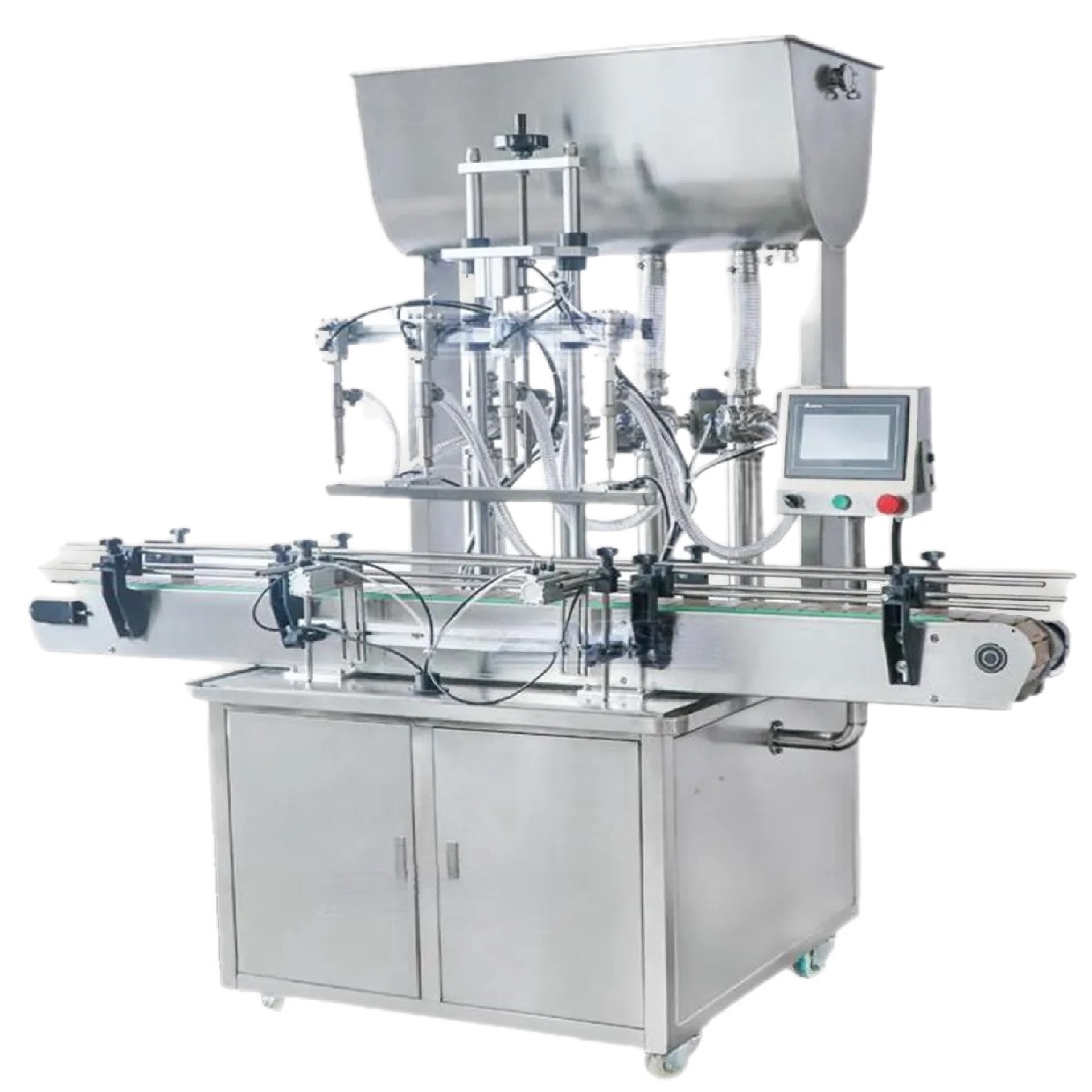
Application engineering
A laboratory viscosity or marketing description is not enough. The filler should be reviewed using product at the normal process temperature, representative bottles and the planned supply method.
Application risks
These factors often decide the filling principle, nozzle design, cleaning route and automation level.
Define the required product-contact finish, dismantling, wash procedure, drainage and documentation rather than relying on a generic “food-grade” label.
Drinks and detergency-like formulations can entrain air, lengthen fill time and leave variable levels.
Oil, syrup and sauce may need different pumps, valve bores, nozzle sizes or fill profiles.
Changeover and cleaning procedures should prevent unacceptable carry-over between products.
Recommended starting routes
The table is a shortlist for discussion; trials and detailed engineering determine the final machine.
| Product or production need | Starting approach | Next page |
|---|---|---|
| Thin drinks and flavourings | Pump, peristaltic or volumetric liquid filling with controlled splash and bottle handling. | Explore route |
| Edible oils | Pump or volumetric routes with clean cut-off and appropriate wetted materials. | Explore route |
| Sauces, syrups and dressings | Piston or positive-displacement systems selected around viscosity and particulates. | Explore route |
| Presentation-led clear bottles | Overflow or vacuum fill-to-level filling where the pack and product are suitable. | Explore route |
Project information
Clear samples and measurable requirements create a faster, more reliable machinery comparison.
Send specification, SDS where applicable, viscosity range and representative samples.
Provide every bottle, closure, insert and label format—not only the easiest size.
State output by volume, batches, shifts, operators, cleaning and changeovers.
Agree test media, samples, rate, tolerances, documentation and line interfaces.
Questions
Application-specific answers for early project planning.
Possibly, but the viscosity difference, nozzle cut-off, cleaning route and dose range may make separate change parts or even separate filling technologies more practical.
Particle size, shape and concentration determine the valve, nozzle and product path. Representative product trials are important because nominal viscosity alone is not enough.
Not every application requires automated CIP. The appropriate cleaning method depends on the product risk, production schedule, machine design and site hygiene plan.
Yes. Filling, cap feeding and tightening, induction sealing, batch/date coding and labelling can be planned as one line.
Send product data, representative bottles, closures, fill range and output. Lancing Ltd can identify the most credible filling route.
Bottle and pack evidence
The product route must be reviewed with the bottle opening, headspace, closure, cleaning method and any temperature change between preparation and filling.
Confirm food-contact pack materials, opening, cap or lid route and the surfaces that must remain clean.
Record temperature, foam, particles, separation, settling and any change in flow during a batch.
Describe allergen or flavour changeovers, product recovery, rinse expectations and the normal production sequence.
Include every bottle and closure that is expected to run, not only the easiest format. Note the normal product condition, fill range, batch pattern and the clean presentation required at the next process.
Send application detailsFor a deeper specialist treatment of the dosing technology, continue to Liquid Fillers UK. This site retains the bottle-format and container-handling decision.
Product-flow choice
A single food-and-drink line can contain products with very different flow, foam, particles and cleaning requirements. Free-flowing still liquids may justify a gravity route, while pumpable sauces and creams may justify a piston or another positive-displacement route.
Temperature route
Food and drink projects that fill heated product need bottle, closure, product-supply and cooling checks that are not captured by a room-temperature filling trial.
Food production acceptance
For a food or drink trial, record more than the number of bottles produced. Identify the recipe and process condition, the condition of any inclusions, the accepted net quantity and the finished closure interface. A machine can meet one of these requirements without meeting the others.
| Record | Examples to include | Why keep it separate |
|---|---|---|
| Product condition | Recipe, temperature and whether solids or bubbles are present | Explains which production condition was actually tested |
| Product quantity | Agreed mass or volume procedure and packaging tare method | Distinguishes dose evidence from visual presentation |
| Pack condition | Neck residue, closure seating and transfer stability | Covers the interface after the filling nozzle |
| Material and hygiene evidence | Contact components, use conditions and cleaning procedure | An operating video alone does not establish these matters |
Use the still-drink route for clear or pulpy beverages and the honey and syrup route for sticky, viscous foods. Where inclusions are part of the recipe, add a composition check using the particulate-product worksheet.
List the supplier evidence and site procedures that must be available at handover. The food-contact documentation checklist links components to intended-use evidence. Keep this file separate from the timed run and from the food business’s own process-validation responsibilities.
Describe the condition in which the food or drink reaches the filler and the operations that follow closure. Ask the responsible product team to define which process conditions the machine trial must represent. Keep the equipment acceptance record separate from the product owner’s decisions about product release and shelf life. This avoids using a mechanically successful bottling demonstration as evidence for a wider process that was not part of the trial.
Do not treat it as that evidence unless a suitable product-validation study is separately defined and performed. Ask your responsible food team which process checks are required in addition to the filler’s mechanical acceptance.