
Direct answer
A piston filler measures a physical displacement, but the whole product path determines whether the bottle is filled cleanly
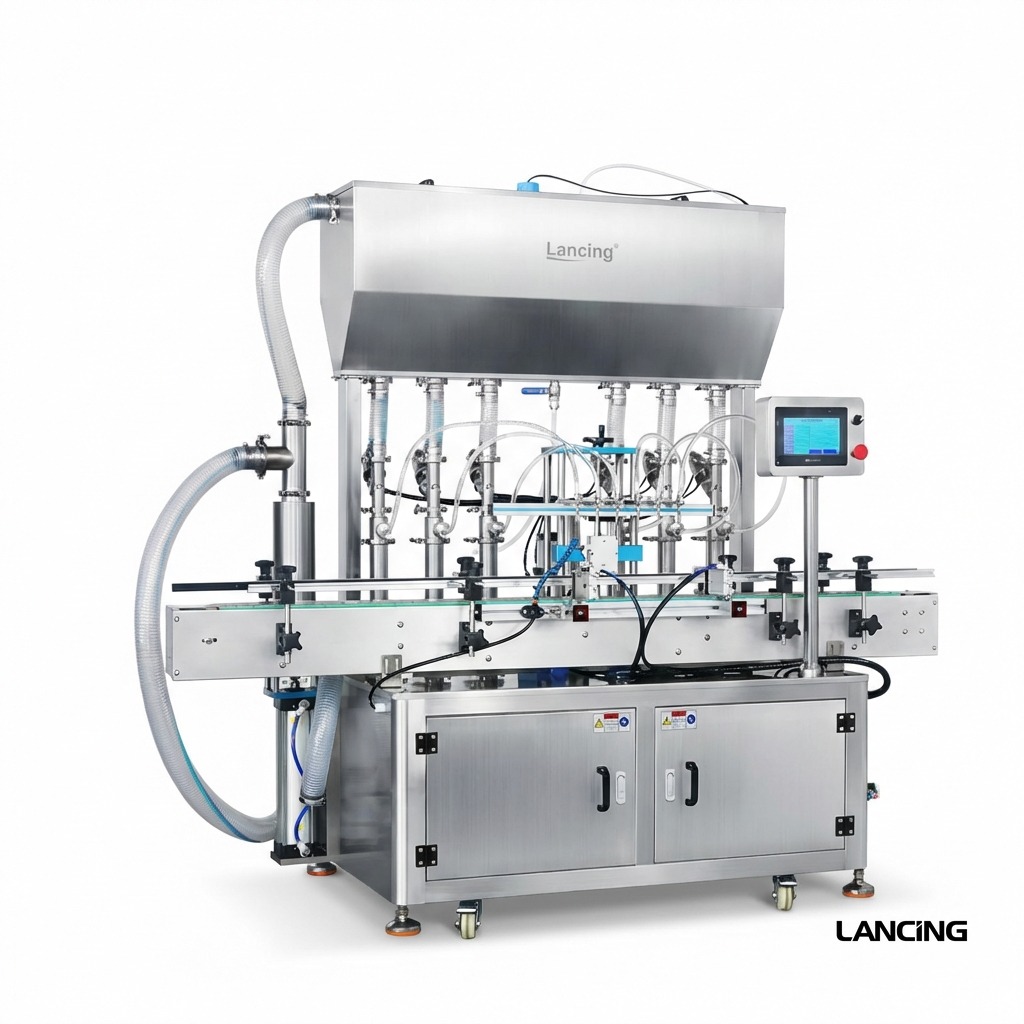
A piston bottle filling machine draws product into a cylinder and then discharges that defined displacement through a valve and nozzle. This positive-displacement principle can suit products that do not flow reliably through a simple gravity valve and products that need a decisive end to the fill. The cylinder size, usable adjustment range, valve geometry, product feed and nozzle must all be matched to the formulation and bottle.
Piston filling is commonly assessed for pumpable liquids, creams, lotions, sauces, gels, oils, adhesives and related products. Suitability is not decided by a single viscosity number. Temperature, shear response, particles, elasticity, stringing, aeration, settling and the way product reaches the cylinder can change the result.
Map the complete piston cycle
Draw
The piston retracts and product enters the cylinder. Supply restriction, trapped air, inconsistent hopper level or an unsuitable inlet valve can make the draw incomplete.
Transfer
The valve changes the flow path between product intake and discharge. Particles, seals, dead spaces and cleaning access must be considered at this point.
Discharge and cut-off
The piston advances and product leaves through the nozzle. Discharge profile, nozzle position and closure behaviour control splash, tailing and the cleanliness of the bottle neck.
Confirm the real dose range rather than assuming one cylinder covers everything
Every piston arrangement has a useful displacement window. A very small dose from a large cylinder may be difficult to set and verify, while a large dose may require several cycles or another cylinder. List the minimum, normal and maximum production fills and state whether acceptance is by volume, mass or another agreed method. Where several products are planned, include density and temperature information for each condition used during verification.
| Selection variable | Questions to resolve | Trial evidence |
|---|---|---|
| Product feed | Hopper, drum, IBC, process vessel or pumped feed; gravity head; agitation or heating | Stable cylinder draw without air pockets or starvation |
| Valve path | Port size, particle clearance, seal compatibility and strip-down access | No blockage, product damage or unacceptable residue |
| Nozzle and bottle | Neck clearance, insertion depth, bottom-up movement, shut-off and suck-back | Clean neck, controlled presentation and no delayed drip |
| Changeover | Cylinder, valve, nozzle, guides, recipes and cleaning boundary | Repeatable first-off approval after the normal change sequence |
Particles need a path review, not a generic “particulate capable” claim
Where the formulation contains pieces, fibres, seeds or suspended material, document the largest and longest expected component, concentration, tendency to settle and whether the product can be damaged by the valve. The inlet, cylinder, transfer valve, hose and nozzle must all pass the formulation. A wide nozzle alone does not make the upstream path suitable.
Product temperature can change both fill behaviour and cleaning
Many viscous products become easier to move when warm, but heating requirements must be defined by the product owner and matched to the hopper, hose, valve, nozzle and control method. Record the allowable temperature window, hold time and what happens during a planned stop. If the product sets, skins or separates, include the restart and line-clearance method in the trial.
Choose the control and automation level around changeover
Compact pneumatic piston fillers can provide a straightforward operator-loaded route. Servo-controlled or otherwise recipe-driven automatic machines can coordinate multiple cylinders, nozzle motion, bottle gating and conveyor flow. The more formats and products involved, the more important it becomes to define which adjustments are recipe-based, which require tools and which require product-contact parts to be removed.
Cleaning must cover the cylinder and valve, not only the nozzle
Agree whether cleaning is by removal and manual wash, circulation, flush, dedicated product path or a machine-specific assisted process. Do not assume clean-in-place capability unless the selected machine and site method have been verified. The cleaning plan should identify trapped product, seal inspection, drain-down, reassembly, line clearance and the first-off checks before production restarts.