Viscosity variation
Temperature can change oil flow and therefore fill time, pressure and nozzle behaviour.

Bottle filling applications
Oil filling projects need stable product feed, clean nozzle cut-off, pack handling and realistic cycle times across viscosity and fill-volume changes.
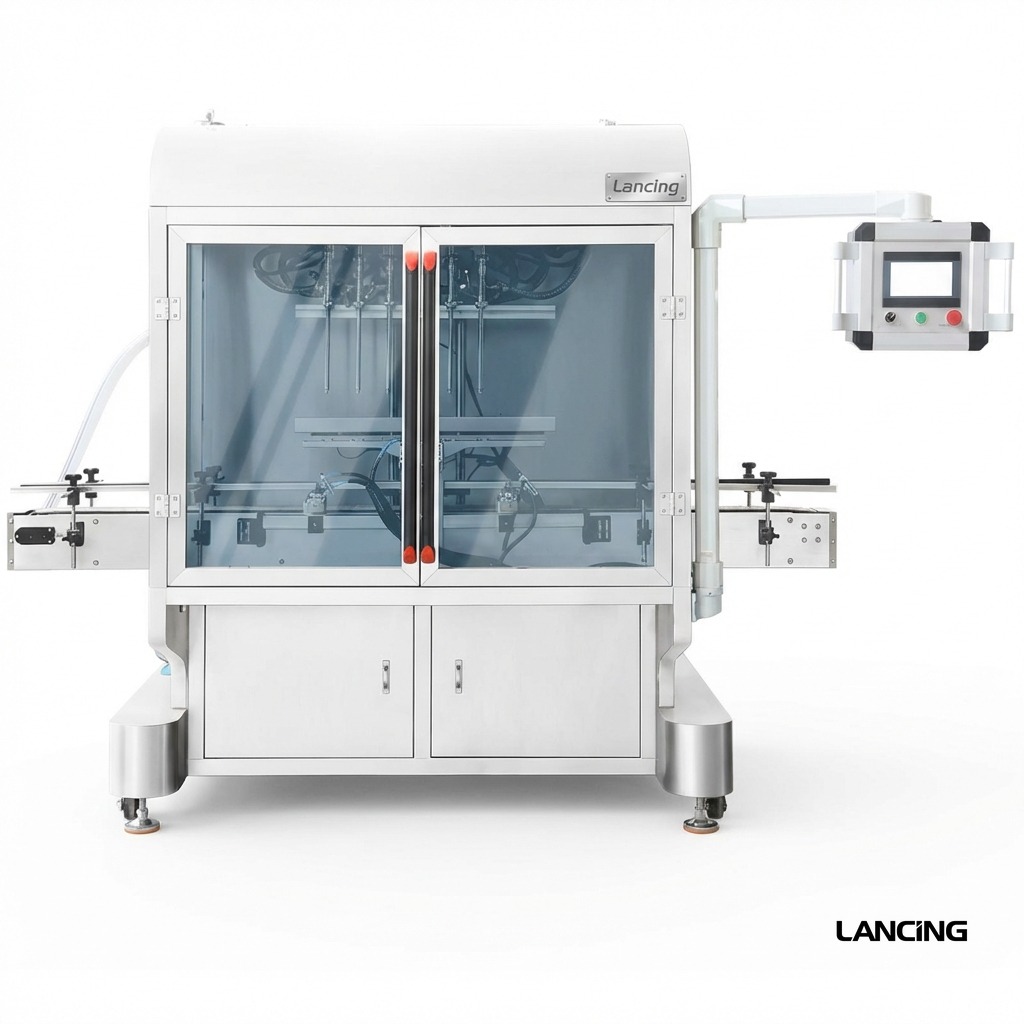
Application engineering
A laboratory viscosity or marketing description is not enough. The filler should be reviewed using product at the normal process temperature, representative bottles and the planned supply method.
Application risks
These factors often decide the filling principle, nozzle design, cleaning route and automation level.
Temperature can change oil flow and therefore fill time, pressure and nozzle behaviour.
A small residual drip can contaminate the bottle, label or conveyor, so nozzle cut-off and hose routing matter.
Multi-litre containers increase fill time, product-supply demand and the importance of stable bottle handling.
Food oils, lubricants and aggressive automotive fluids can require different wetted materials and cleaning procedures.
Recommended starting routes
The table is a shortlist for discussion; trials and detailed engineering determine the final machine.
| Product or production need | Starting approach | Next page |
|---|---|---|
| Small and medium oil bottles | Gear pump, diaphragm or volumetric filling with anti-drip control. | Explore route |
| Multi-litre containers | Higher-flow multi-head liquid filling with adequate tank and pump supply. | Explore route |
| Short-run oil filling | Semi-automatic pump or piston stations for operator-loaded production. | Explore route |
| Complete lubricant line | Conveyors, filling, capping, induction sealing, coding and labelling. | Explore route |
Project information
Clear samples and measurable requirements create a faster, more reliable machinery comparison.
Send specification, SDS where applicable, viscosity range and representative samples.
Provide every bottle, closure, insert and label format—not only the easiest size.
State output by volume, batches, shifts, operators, cleaning and changeovers.
Agree test media, samples, rate, tolerances, documentation and line interfaces.
Questions
Application-specific answers for early project planning.
Gear-pump, diaphragm, piston and other pump routes may suit oil. Selection depends on viscosity, compatibility, dose range, output and cleaning.
A positive nozzle shut-off or suck-back action, suitable hose routing, correct nozzle size and a stable pressure profile can reduce trailing drips.
It may be possible, but nozzle spacing, guides, fill time, conveyor loading and dosing range must be reviewed. Separate recipes and change parts are likely.
The feed system must deliver at least the combined peak demand of all active filling heads with enough margin to keep pressure and level stable.
Send product data, representative bottles, closures, fill range and output. Lancing Ltd can identify the most credible filling route.
Bottle and pack evidence
Oils can vary widely in viscosity and stringing behaviour, while containers range from small bottles to larger handled packs. The nozzle, bottle control and downstream cap or induction-seal route must be coordinated.
Record viscosity across the production temperature range, aeration, additives and any tendency to string or retain a final drop.
Include small bottles, handled containers and the least stable format, with closure and induction-seal components where used.
Define acceptable neck residue, drip collection, conveyor protection and the cleaning or flush procedure.
Include every bottle and closure that is expected to run, not only the easiest format. Note the normal product condition, fill range, batch pattern and the clean presentation required at the next process.
Send application detailsFor a deeper specialist treatment of the dosing technology, continue to Liquid Fillers UK. This site retains the bottle-format and container-handling decision.
Measurement route
Oils and lubricants can change flow and density with temperature. A volumetric route and a net-weight route should therefore be compared using the same product condition, bottle set and acceptance method rather than converted assumptions alone.
Multi-litre oil projects
Oil and lubricant projects often require a stable pump feed, clean shut-off and controlled movement of heavier filled containers.
Assess bottle stability, handles, neck access, filled weight and transfer to capping and labelling.
Compare five-litre routesPlan source-vessel location, suction, temperature, level control, refill and cleaning with the filler.
Read the supply guideFor oil and lubricant filling, describe how empty packs are delivered and how full packs leave the station. A bottle or jerrycan that is easy to present empty may create a different task after filling and closing. Ask the proposal to show the complete route to the next operation, including operator access and the planned movement of rejected packs. Include the largest intended format in this review, even where most production uses a smaller bottle.
Send the actual container and closure, product information, intended output and the proposed full-pack handling route. Include the space and downstream equipment available so filling and removal can be considered together.