Dose range
The smallest and largest fills determine cylinder or module sizing; very wide ranges may need change parts.

Bottle filling machinery
Positive-displacement bottle filling systems that meter a defined volume, with cylinder or dosing-module selection matched to the required fill range.
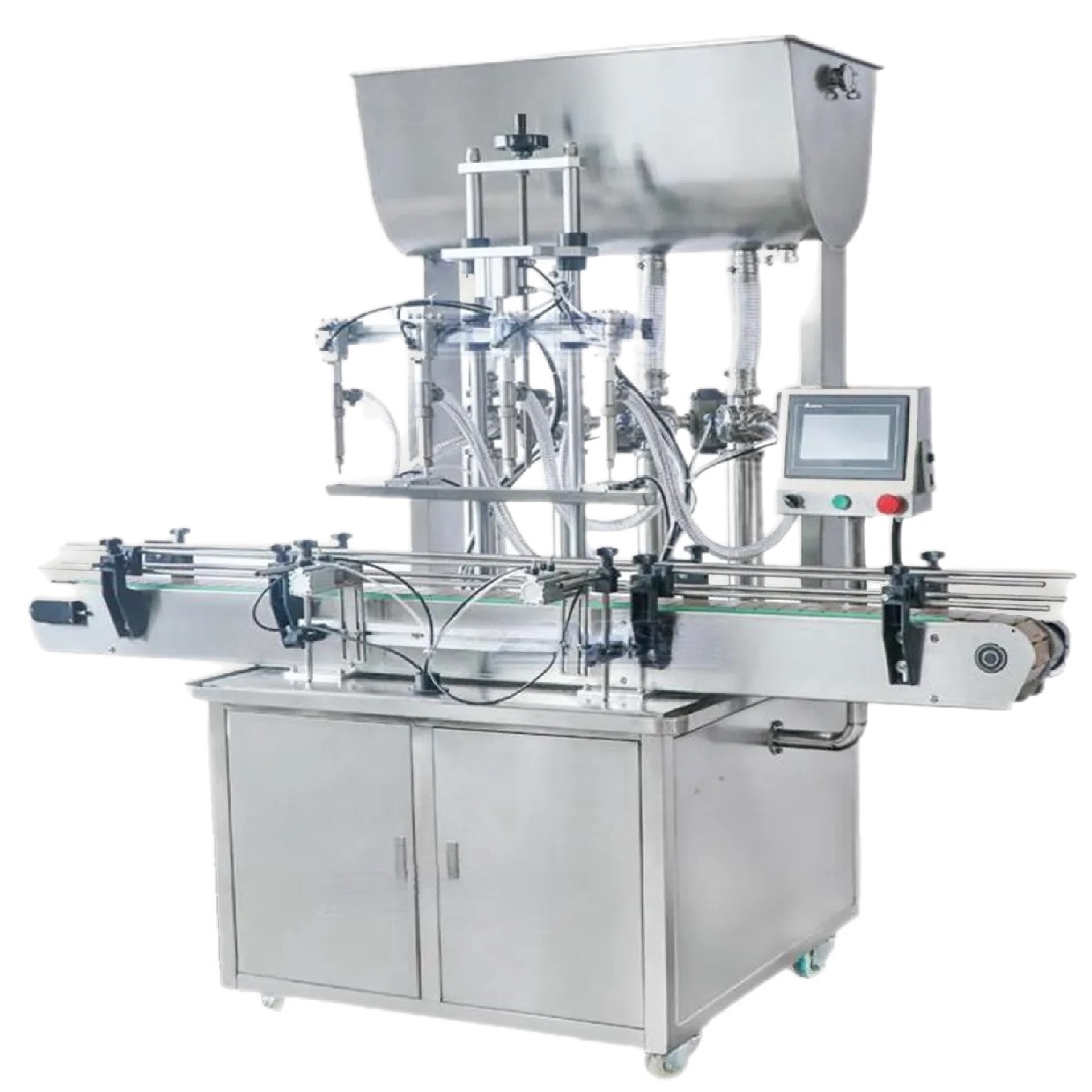
Application fit
The machine should be selected as a complete product-and-pack system, not from fill volume alone.
Specification priorities
The same nominal fill volume can require a very different solution when product behaviour, pack geometry or cleaning changes.
The smallest and largest fills determine cylinder or module sizing; very wide ranges may need change parts.
A hopper, elevated tank, pumped feed or draw-from-vessel arrangement must maintain a stable supply.
Product viscosity, particles and stringing govern valve bore, seal selection and cut-off design.
Recipe settings should be verified gravimetrically or volumetrically using the actual product at normal production conditions.
Filling routes
Use the filling principle as a shortlist, then verify it with the actual formulation and representative bottles. Headline technology names do not replace product trials.
| Configuration | Practical role |
|---|---|
| Piston draw stroke | The dosing chamber fills from the product supply during the return stroke. |
| Measured dispense stroke | A controlled forward stroke displaces product through the outlet valve and nozzle. |
| Bottle indexing | Automatic machines stop or control bottles under the nozzle bank before the dose begins. |
| Recipe and adjustment | Mechanical or servo adjustment sets the volume within the selected dosing range. |
Published reference
These figures describe a cited source configuration, not every machine available for this application.
Reference configuration only: published capacities and specifications below are taken from a representative published source page. Product testing, bottle geometry, fill volume, number of heads and line conditions determine the final specification.
Typical products
These examples indicate where the route may be considered; the actual product and container still need to be reviewed.
A potential application for volumetric fillers, subject to product and pack assessment.
A potential application for volumetric fillers, subject to product and pack assessment.
A potential application for volumetric fillers, subject to product and pack assessment.
A potential application for volumetric fillers, subject to product and pack assessment.
A potential application for volumetric fillers, subject to product and pack assessment.
A potential application for volumetric fillers, subject to product and pack assessment.
Project route
A structured review prevents the filler, bottle control and downstream machines from being specified in isolation.
Confirm viscosity, foam, particles, temperature, compatibility and cleaning.
Review bottles, necks, closures, labels and stability using representative samples.
Agree batch size, target rate, operators, changeovers and future growth.
Freeze layout, interfaces, utilities, guarding, tests, installation and training scope.
Related planning
Use these pages to compare adjacent machine routes and prepare a more accurate enquiry.

Compact operator-loaded machines for shorter production runs.
Explore Semi-automatic fillersConveyorised multi-head filling for repeat production.
Explore Automatic bottle fillers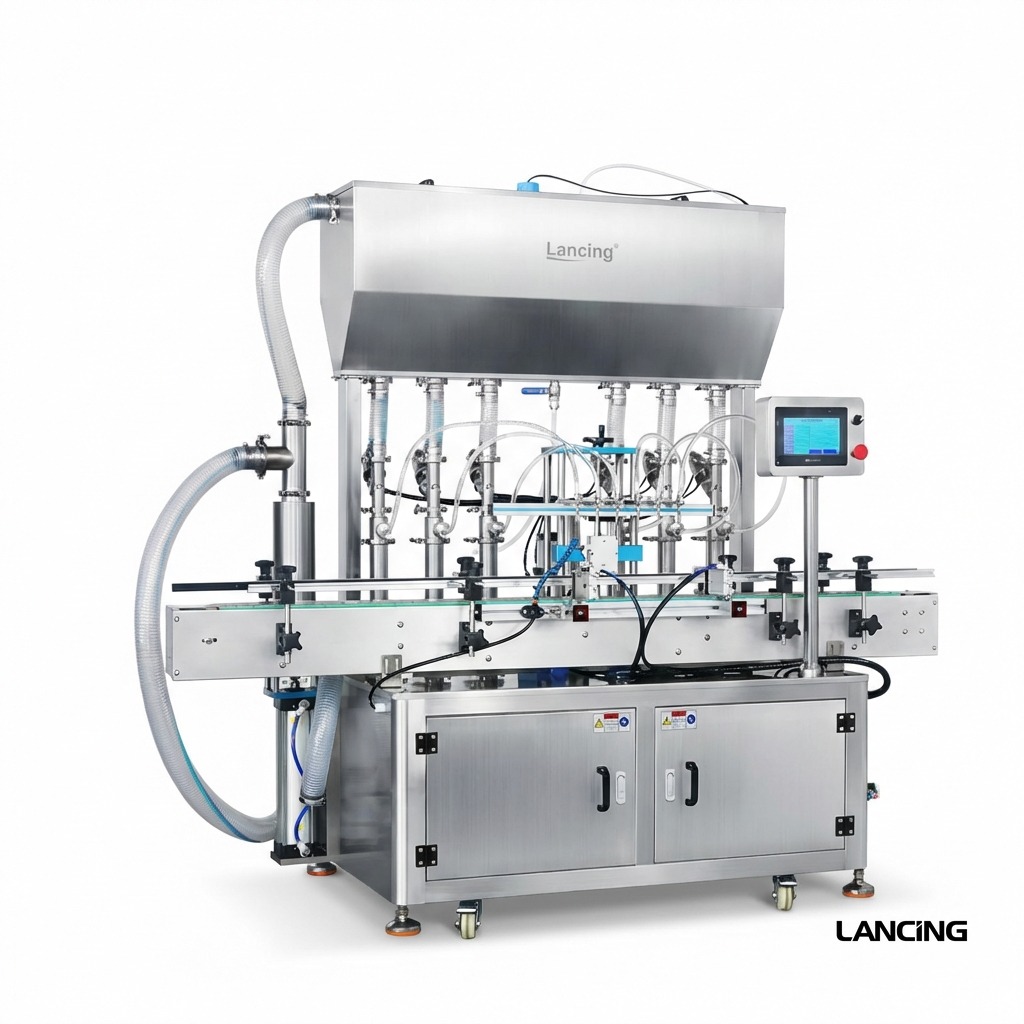
Application guidance for products that string, tail or need hopper handling.
Explore Sauces, creams & viscous productsQuestions
Practical answers for early project planning.
The machine dispenses a measured volume for each cycle. In a piston filler, that volume is related to the dosing chamber and stroke rather than a fill-to-level endpoint.
Published reference machines may state an accuracy under defined test conditions, but actual repeatability depends on product consistency, air, temperature, feed stability, machine setup and measurement method.
Some valve and nozzle arrangements can pass particles, but the size, shape, concentration and product viscosity must be reviewed. A product trial is strongly recommended.
No. Each cylinder or dosing module covers a range, but fills outside that range can require a different module. The most common volume should sit comfortably within the selected range.
Lancing Ltd can compare the practical bottle filling routes and confirm the right next step before quotation.
Measured dose and pack result
Volumetric describes the dosing objective, not the complete bottle-handling solution. Calibration, product condition, nozzle cut-off and container presentation all influence the result seen at the end of the line.
Place the normal dose comfortably within the selected measuring element rather than relying on its extreme limits.
Keep the opening aligned and stable while the measured dose is delivered at the required flow rate.
Agree how samples will be checked, how corrections are recorded and what happens after product or format changeover.
These guides isolate the pack variables that can change an otherwise suitable filling-machine route.
Measurement comparison
Volumetric equipment meters a controlled displacement or volume under agreed conditions. Net-weight equipment ends the fill using measured bottle mass. Neither route is universally better; the correct choice follows the product, bottle tare, legal or quality method, cycle time and verification process.
| Question | Volumetric route | Net-weight route |
|---|---|---|
| Primary controlled value | Displacement or calibrated volume | Measured net mass after tare handling |
| Bottle variation concern | Usually independent of empty-bottle mass | Requires a defined tare method and stable weighing |
| Product condition | Density and temperature may affect conversion between volume and mass | Flow and settling still affect coarse/fine control and cycle time |
| Verification | Confirm the agreed volume or converted mass method | Confirm tare, scale and sampling method independently |