Pump technology
Gear, diaphragm and other pumps behave differently with viscosity, shear, particles, solvents and dry-running conditions.

Bottle filling machinery
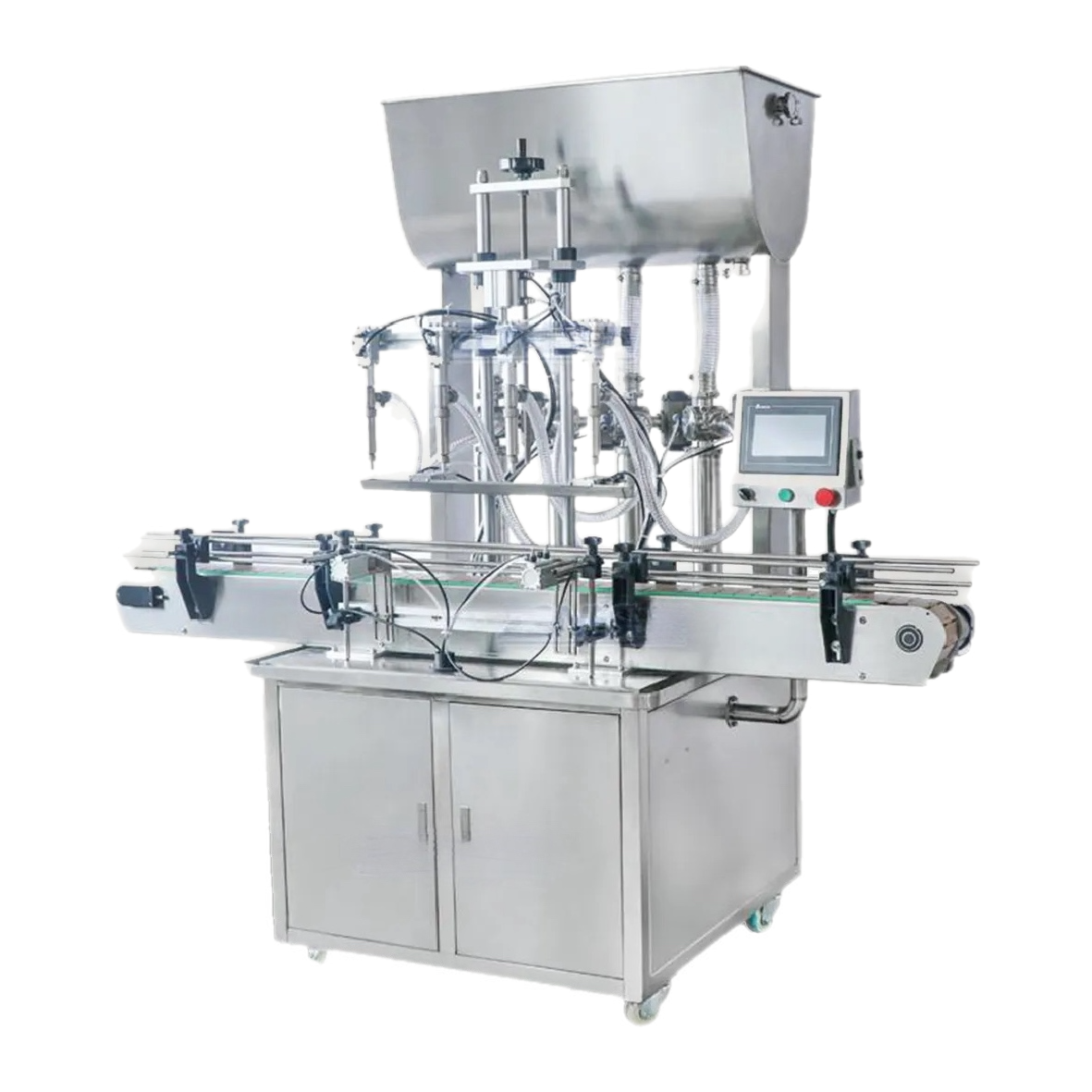
Pump-based fillers selected around liquid compatibility, flow behaviour and the required control method, from compact stations to automatic multi-pump lines.

Application fit
The machine should be selected as a complete product-and-pack system, not from fill volume alone.
Specification priorities
The same nominal fill volume can require a very different solution when product behaviour, pack geometry or cleaning changes.
Gear, diaphragm and other pumps behave differently with viscosity, shear, particles, solvents and dry-running conditions.
Suction lift, product tank level, hose length and air ingress affect flow stability and dose repeatability.
Nozzle shut-off, suck-back and hose routing should be set around the liquid’s tendency to run or string.
Confirm how pump heads, hoses, manifolds and nozzles will be flushed, dismantled or dedicated by product.
Filling routes
Use the filling principle as a shortlist, then verify it with the actual formulation and representative bottles. Headline technology names do not replace product trials.
| Configuration | Practical role |
|---|---|
| Gear-pump metering | Rotating gears deliver a controlled flow, with dose governed by speed, revolutions or time. |
| Diaphragm pumping | A flexible diaphragm moves liquid while keeping selected mechanical components separated from the product path. |
| Independent channels | Automatic systems can control each pump separately for calibration and recipe adjustment. |
| Diving-nozzle option | Vertical nozzle movement can reduce splash and foam on suitable configurations. |
Typical products
These examples indicate where the route may be considered; the actual product and container still need to be reviewed.
A potential application for gear pump fillers, subject to product and pack assessment.
A potential application for gear pump fillers, subject to product and pack assessment.
A potential application for gear pump fillers, subject to product and pack assessment.
A potential application for gear pump fillers, subject to product and pack assessment.
A potential application for gear pump fillers, subject to product and pack assessment.
A potential application for gear pump fillers, subject to product and pack assessment.
Project route
A structured review prevents the filler, bottle control and downstream machines from being specified in isolation.
Confirm viscosity, foam, particles, temperature, compatibility and cleaning.
Review bottles, necks, closures, labels and stability using representative samples.
Agree batch size, target rate, operators, changeovers and future growth.
Freeze layout, interfaces, utilities, guarding, tests, installation and training scope.
Related planning
Use these pages to compare adjacent machine routes and prepare a more accurate enquiry.
Turn product, pack and output requirements into a useful shortlist.
Explore How to choose a bottle filler
Compare labour, output, changeover and line-integration trade-offs.
Explore Semi-auto vs automatic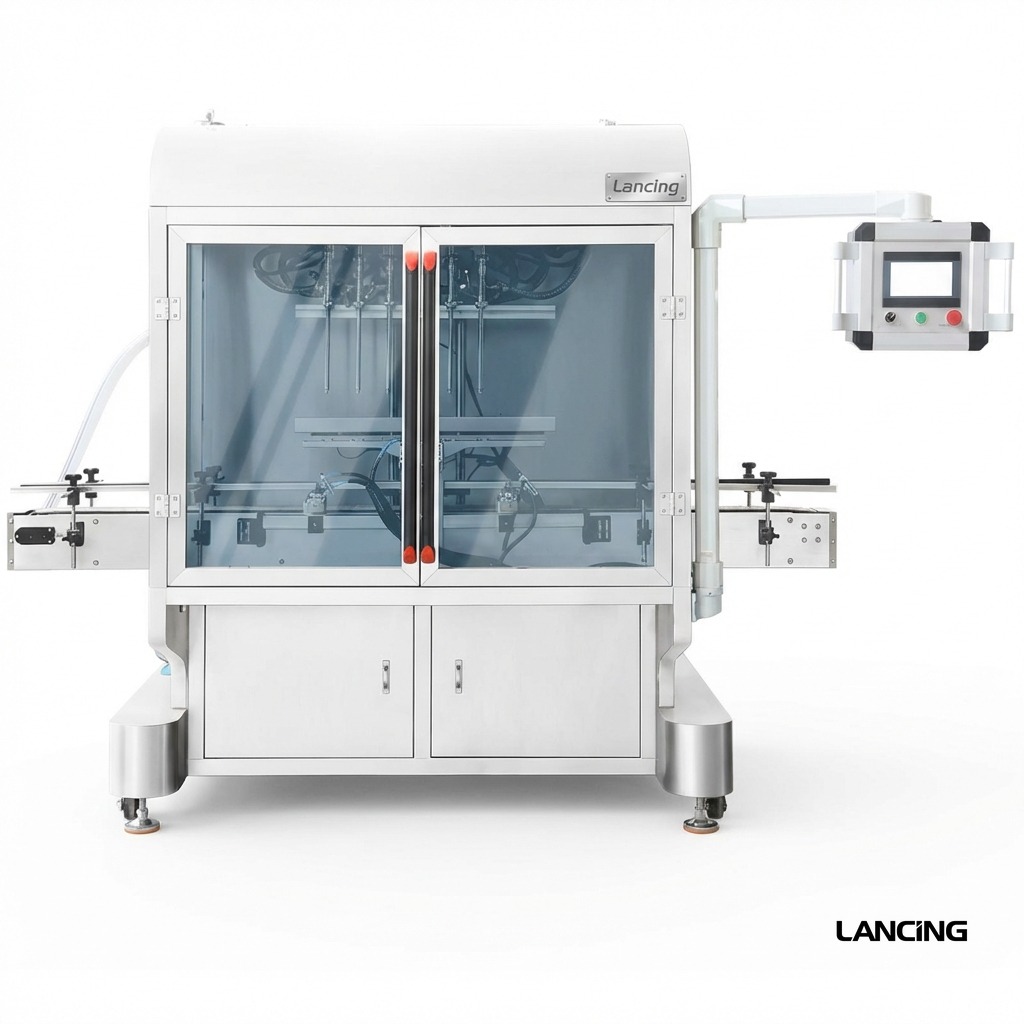
Browse industry and product-led selection guidance.
Explore Bottle filling applicationsQuestions
Practical answers for early project planning.
It can suit consistent, pumpable liquids where electronic pump control offers the required dose and output. Product compatibility and cleanability must be confirmed.
Abrasive or solid-bearing products can accelerate wear or jam close-clearance pumps. Particle size and formulation should be reviewed before selecting the pump.
They use different pumping mechanisms and have different capabilities for viscosity, pulsation, chemical compatibility and maintenance. Selection should be based on the actual liquid and process.
Many multi-pump automatic systems allow individual channel adjustment, which can compensate for small differences in tubing or pump performance.
Lancing Ltd can compare the practical bottle filling routes and confirm the right next step before quotation.
Pump delivery and pack control
Pump control can provide flexible recipe adjustment, but the delivered result still depends on stable product supply, repeatable bottle location and a nozzle that stops cleanly for the real liquid.
Define tank, drum or process-feed conditions and how air is prevented from entering the product path.
Confirm the opening and guide method so the dose is delivered centrally without striking the shoulder.
Observe delayed drips, stringing or siphoning before releasing the bottle towards capping or labelling.
These guides isolate the pack variables that can change an otherwise suitable filling-machine route.
Upstream engineering
A stable gear-pump dose depends on priming, suction conditions, air-free product, compatible materials and a controlled refill route.