Dose resolution
The dosing element must provide useful adjustment at the minimum fill, not merely reach the maximum volume.

Bottle filling machinery
Compact filling equipment for small containers where low dose, narrow openings, bottle stability and clean nozzle cut-off drive the machine design.

Application fit
The machine should be selected as a complete product-and-pack system, not from fill volume alone.
Specification priorities
The same nominal fill volume can require a very different solution when product behaviour, pack geometry or cleaning changes.
The dosing element must provide useful adjustment at the minimum fill, not merely reach the maximum volume.
Light containers can tip or move, so nests, guides, puck handling or neck support may be required.
The nozzle must fit the neck with clearance for displaced air and without touching the bottle unnecessarily.
Small caps, plugs, droppers and pipettes often need specialist feeding and precise placement after filling.
Filling routes
Use the filling principle as a shortlist, then verify it with the actual formulation and representative bottles. Headline technology names do not replace product trials.
| Configuration | Practical role |
|---|---|
| Peristaltic dosing | Electronic pump control and selected tubing provide a compact route for small liquid doses. |
| Miniature piston | A small dosing cylinder provides positive displacement for liquids or selected viscous products. |
| Time-pressure or pump dosing | A controlled pressure or pump cycle can suit some uniform low-viscosity formulations. |
| Puck-based line handling | Individual carriers stabilise small or irregular containers through filling and closing stages. |
Typical products
These examples indicate where the route may be considered; the actual product and container still need to be reviewed.
A potential application for small bottle fillers, subject to product and pack assessment.
A potential application for small bottle fillers, subject to product and pack assessment.
A potential application for small bottle fillers, subject to product and pack assessment.
A potential application for small bottle fillers, subject to product and pack assessment.
A potential application for small bottle fillers, subject to product and pack assessment.
A potential application for small bottle fillers, subject to product and pack assessment.
Project route
A structured review prevents the filler, bottle control and downstream machines from being specified in isolation.
Confirm viscosity, foam, particles, temperature, compatibility and cleaning.
Review bottles, necks, closures, labels and stability using representative samples.
Agree batch size, target rate, operators, changeovers and future growth.
Freeze layout, interfaces, utilities, guarding, tests, installation and training scope.
Related planning
Use these pages to compare adjacent machine routes and prepare a more accurate enquiry.
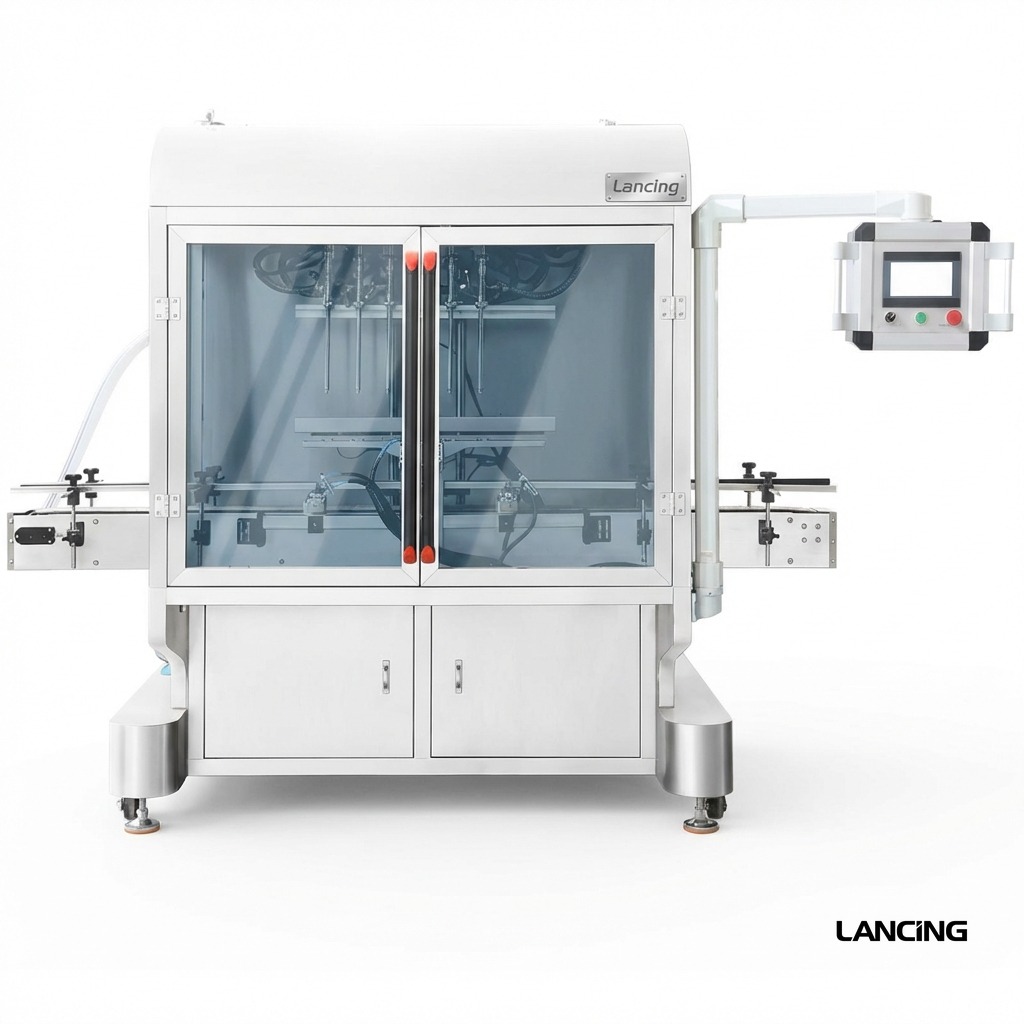
Compare pump, peristaltic, volumetric and fill-to-level routes.
Explore Liquid bottle fillersPack and process planning for narrow-neck, low-volume products.
Explore Pharma & small-dose filling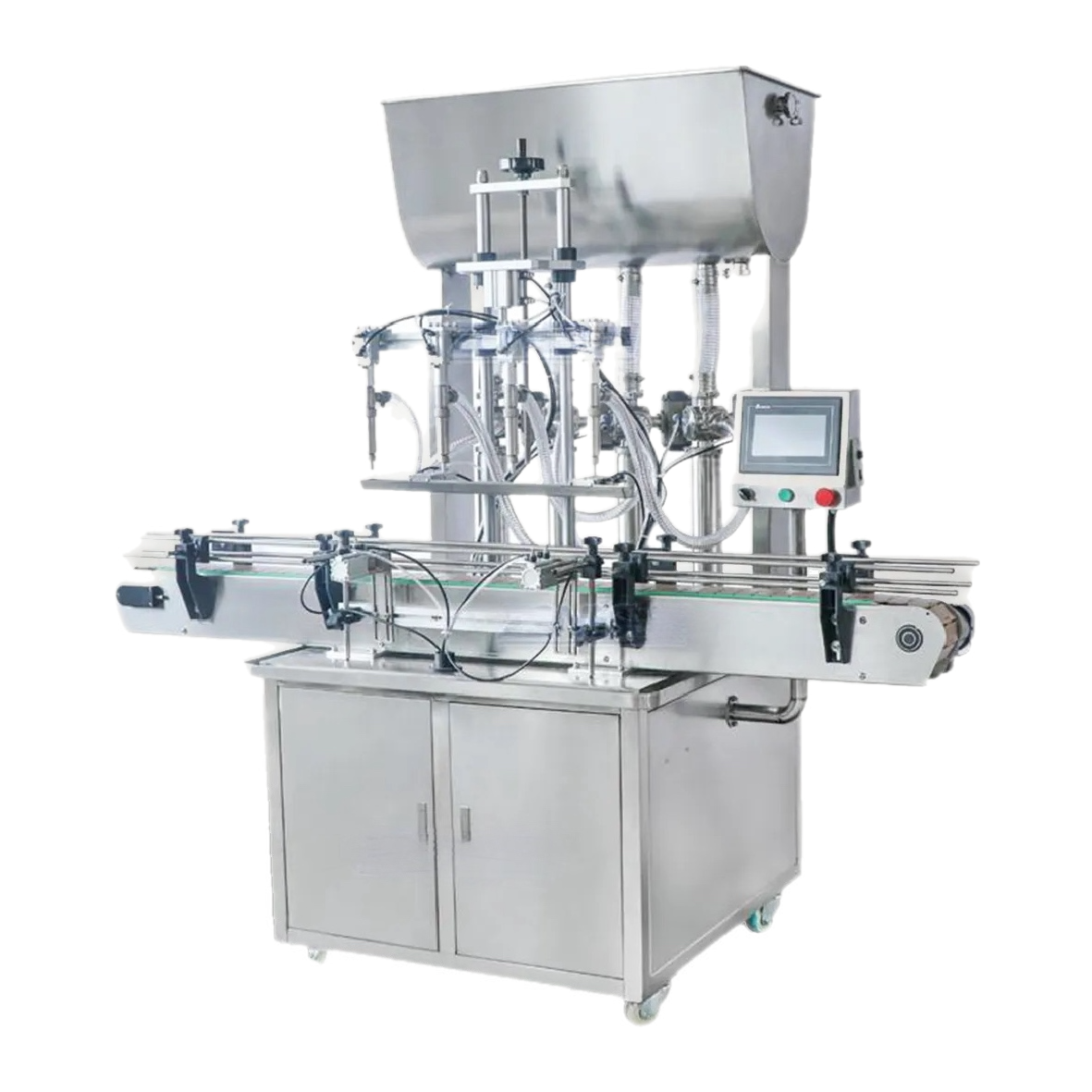
Understand the practical differences before testing.
Explore Filling principles comparedQuestions
Practical answers for early project planning.
There is no single threshold. The key is whether the dosing method gives stable control at the minimum fill and whether the nozzle and bottle-handling system suit the small pack.
A very wide range may be technically possible only with different tubing, pumps or cylinders, and cycle times may be impractical. It is usually better to optimise around the main volume range.
Options include bottle nests, neck guides, pucks, star wheels, side belts and controlled conveyor gating.
Yes, but cap orientation, feeding, placement and torque often require dedicated equipment designed around the exact closure.
Lancing Ltd can compare the practical bottle filling routes and confirm the right next step before quotation.
Small pack engineering
Small bottles magnify alignment, static, neck-clearance and cut-off problems. A minor movement under the nozzle can affect presentation or lose product outside the opening, so nests, guides, pucks and the closure sequence deserve early attention.
Use a repeatable nest, rail or puck when the opening is small relative to the nozzle or when bottles are light.
Check priming, tubing or pump resolution, nozzle wetting and the time needed for the final drop to clear.
Plan plugs, droppers, caps or pumps so the small bottle stays upright and the neck remains clean after filling.
These guides isolate the pack variables that can change an otherwise suitable filling-machine route.
Small-dose pack verification
Small containers magnify the effect of bottle location, neck clearance, retained drops and normal variation in the pack. A dosing device can repeat its cycle while the finished bottles still differ in appearance or cleanliness. The trial should therefore join the measurement method to the real bottle, nozzle, product condition and closure interface.
Use samples that represent normal dimensional variation. Confirm the bottle cannot sit off-centre, tilt in a nest or move when the nozzle approaches or withdraws.
Observe the nozzle tip after steady running and after a pause. A retained drop, string or delayed release may matter more to neck cleanliness than the nominal dosing cycle.
Define which neck, thread or sealing surfaces must remain dry and how quickly the closure, insert, pipette or dropper is applied after filling.
| Verification point | What to record | Pack-related reason |
|---|---|---|
| Minimum dose | Measurement method, product condition, priming state and accepted sample sequence | Low fills can be more sensitive to tubing, valve and retained-volume effects |
| Bottle opening | Usable internal diameter, shoulder restriction and nozzle clearance | Nominal closure size may not describe the space available to the nozzle |
| Visible level | Bottle internal shape and the agreed time after filling before inspection | Small quantity differences and bottle variation can create a larger visual change |
| Stop and restart | First accepted bottles, drips, bubbles and any re-priming step | Normal interruptions may produce a different result from continuous running |
| Changeover | Recipe, tubing or dosing-part changes, bottle fixture and first-off approval | Repeatability depends on restoring the complete pack and product setup |
The fill accuracy and dose verification guide explains how to define volume, mass and visible-level checks without treating them as the same requirement.
The trial, FAT and SAT guide helps build a sample and restart sequence around the real production pack.
Small-bottle questions
For small bottles, nozzle alignment, sensor position and the measurement method can be as important as the dosing device.
Small bottles often have limited base area, low empty weight and little clearance between the nozzle and neck. A small positional error can therefore cause contact, splash or a missed opening. Guides, fixtures, pucks or nests must control the bottle without distorting it or obstructing removal.
The least stable production bottle should be tested at the intended line speed and after a restart.
The usable nozzle must fit the real neck opening with allowance for bottle tolerance, alignment, movement and product return or venting where relevant. Product viscosity, particles, required flow and clean cut-off can conflict with the available bore, so a narrow neck may set the cycle time or require another filling approach.
Supply neck drawings and physical samples from normal production variation.
Very light bottles can be supported with closely set guides, controlled back-pressure, pucks, nests, neck handling or a dedicated indexing method. The correct route depends on bottle stiffness, centre of gravity, shape and whether the support must continue through capping or labelling.
Avoid solving one station in isolation; test the bottle through the immediate infeed and outfeed transfers.
Small-dose samples should be checked against a defined quantity or mass method and, separately, against any visual presentation requirement. Bottle geometry, meniscus, bubbles and wall thickness can make equal quantities appear different, so the measurement timing and instrument must be recorded.
Use representative bottles and include start-up and restart samples rather than checking only steady-state fills.
Small-dose application
Small fragrance packs add narrow necks, high product value, clean changeovers, specialist closures and potential flammable-liquid controls to the dose problem.
Choose the method from the product, bottle rigidity, neck, quantity criterion and cleaning rather than dose alone.
Read the perfume and essential-oil guideTest inserts, plugs, pumps, sprays, dip tubes, crimps or screw closures with a clean filled neck and controlled bottle transfer.
Review nozzle selection