
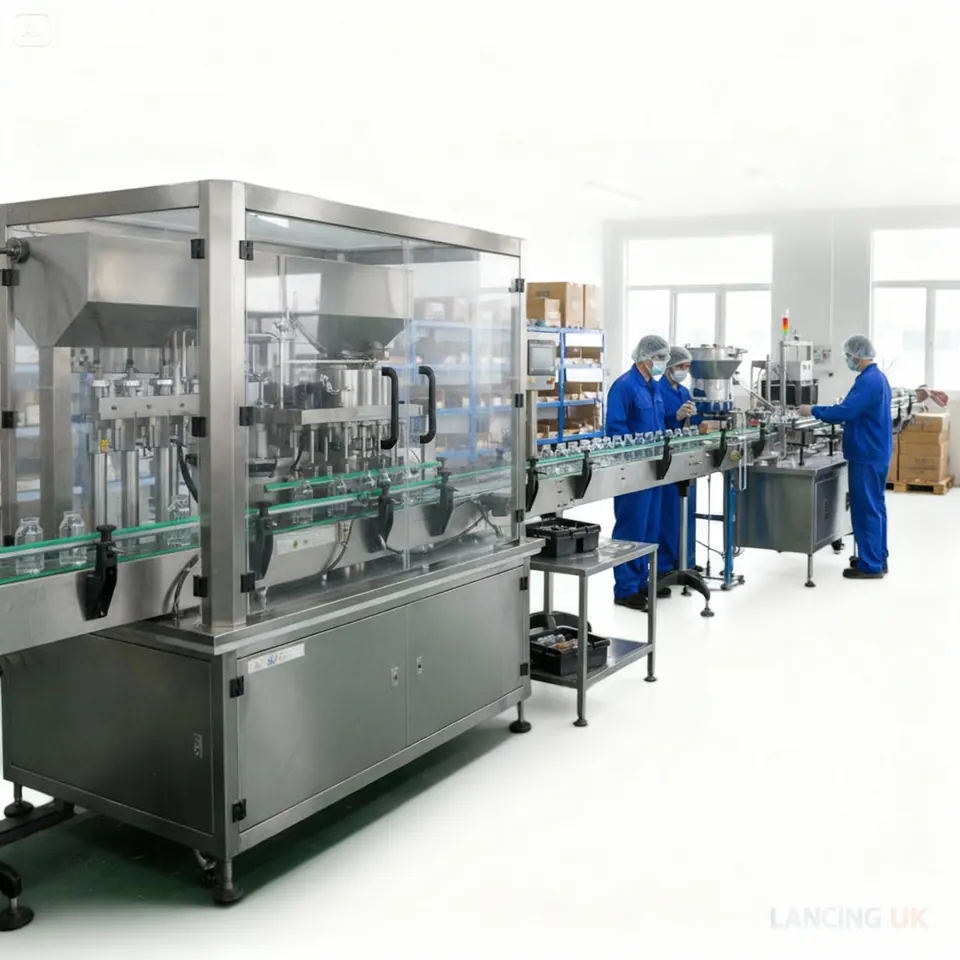
Prove the conditions that matter in production
A useful trial represents the difficult normal product and bottle—not only an easy demonstration
Product trials, factory acceptance testing (FAT) and site acceptance testing (SAT) serve different purposes, but they should use one traceable project brief. The brief identifies which product and bottle combinations are in scope, what can be demonstrated at each stage, how the result will be measured and which tests must be deferred until the production environment is available.
Build a representative test matrix
| Matrix item | Include | Reason |
|---|---|---|
| Product condition | Normal temperature, viscosity or flow, density where relevant, foam, particles, aeration and supply method | Prevents a convenient substitute condition from hiding the real filling risk |
| Bottle family | Smallest opening, least stable empty bottle, tallest format, flexible or asymmetric packs and normal manufacturing variation | Tests nozzle access, location, conveyor handling and discharge |
| Closure set | Caps, pumps, triggers, plugs, droppers, dip tubes, seals and any orientation requirement | Confirms the filled bottle is suitable for the next operation |
| Fill settings | Minimum, normal and maximum production quantities with the planned measurement method | Shows whether the practical range can be set, verified and changed |
| Production sequence | Start, steady run, planned stop, restart, replenishment, format change and product change | Tests repeatability and recovery rather than only a settled continuous cycle |
Use product trials to reduce specification risk
An early trial can compare nozzle approach, product entry, foam, stringing, drip control, bottle stability and the time needed for an acceptable result. It may also show that more product data or different samples are required. Record what was demonstrated and which conditions remain assumptions. A short bench trial should not be treated as proof of a complete automated line unless bottle handling and connected operations were actually included.
Define the FAT scope
FAT normally takes place before dispatch, using the machine or line configuration available at the supplier. State whether production product, a substitute medium, production bottles and closures will be present. Identify the planned run states, measurement method, documentation, safety and control functions, changeover tasks and any connected modules included. Where the final site utilities or upstream equipment are unavailable, mark those checks as deferred rather than silently assuming equivalence.
Define the SAT scope
SAT confirms the installed system in the production environment. It can include site utilities, product supply, actual upstream and downstream interfaces, floor layout, operator access, data or control links and the agreed production materials. The SAT plan should distinguish installation completion from production-performance testing and should identify who supplies product, packs, operators and measuring equipment.
Test normal interruptions and recovery
- No bottle at the filling position and the expected no-bottle/no-fill response
- Upstream starvation and return of bottle or component supply
- Downstream blockage, accumulation and coordinated restart
- Low product supply, replenishment and any required re-priming
- Emergency or fault stop followed by controlled recovery and bottle disposition
- Format change, line clearance, recipe confirmation and first-off approval
Measure good output, not only machine motion
Record accepted filled bottles after applying the agreed quantity, presentation, closure, code, label and reject rules. State the test duration or production quantity, the bottle and product format, staffing, normal interventions and whether planned samples are excluded. If the line includes several machines, record the source and duration of stops so the acceptance result can be understood.
Keep an evidence record
The final record should identify the test version, machine configuration, samples, product condition, recipes, change parts, measurement equipment, results, deviations, agreed actions and any checks carried forward to site. Photographs or video can support the record where authorised, but they should not replace measurements and signed test results.