Technology comparison
The filling principle is only the starting point
Machine names describe how product is moved or measured, but they do not define the complete result. Feed pressure, valve timing, nozzle geometry, bottle control and calibration can be as important as the underlying dosing method.
Comparison table
| Method | How it doses | Common strengths | Main checks |
|---|---|---|---|
| Piston volumetric | A chamber fills and a piston displaces a measured volume. | Broad viscosity range; positive displacement; semi-auto or multi-head automatic formats. | Cylinder range, valve bore, particles, air, seals, hopper and strip-down. |
| Peristaltic | Rollers compress tubing and move product by controlled pump revolutions. | Defined tubing product path; good control of small doses; straightforward tube-set changes. | Tubing compatibility and life, flow limit, viscosity, pulsation and calibration. |
| Gear pump | Rotating gears deliver a controlled flow or number of revolutions. | Electronic channel control; compact multi-pump systems; useful for compatible liquids. | Particles, abrasion, shear, priming, dry running, viscosity and cleaning. |
| Diaphragm pump | A flexible diaphragm moves liquid through check valves. | Material options and separation of selected mechanical components from the liquid. | Pulsation, valve compatibility, air supply or drive, flow range and maintenance. |
| Gravity / timed flow | Product flows from a tank through a controlled valve for a set time or level. | Simple product path for suitable thin liquids; potentially easy to clean. | Head-pressure variation, foam, tank level, viscosity change and dose control. |
| Overflow / vacuum | A sealed nozzle establishes a target visible liquid level in the bottle. | Consistent presentation in clear rigid bottles. | Bottle rigidity, neck seal, return flow, foaming and volume verification. |
| Net-weight | The bottle is weighed during filling and flow stops at target mass. | Direct mass measurement; useful for large fills or products sold by weight. | Scale stability, vibration, tare variation, dribble control and cycle time. |
Volumetric piston filling
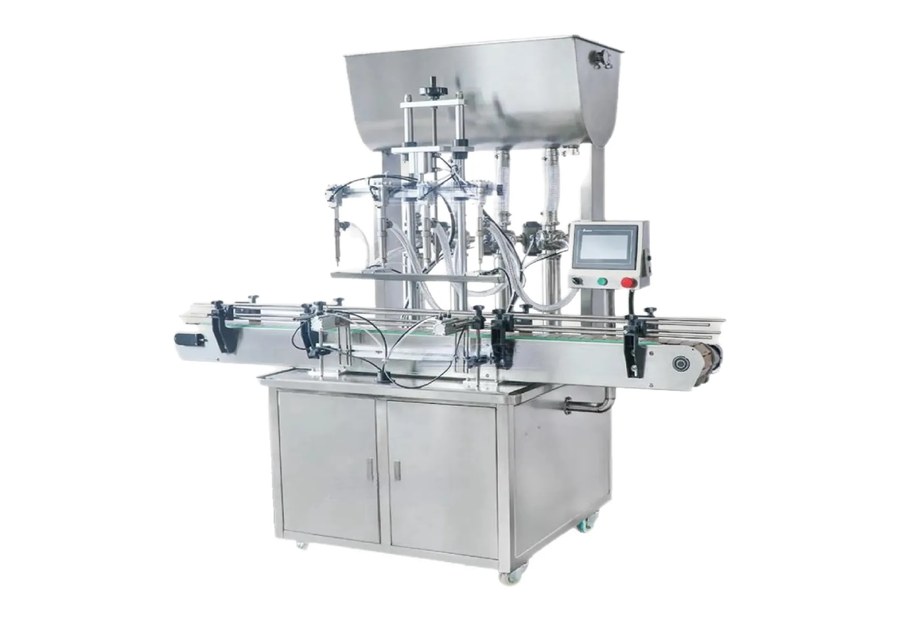
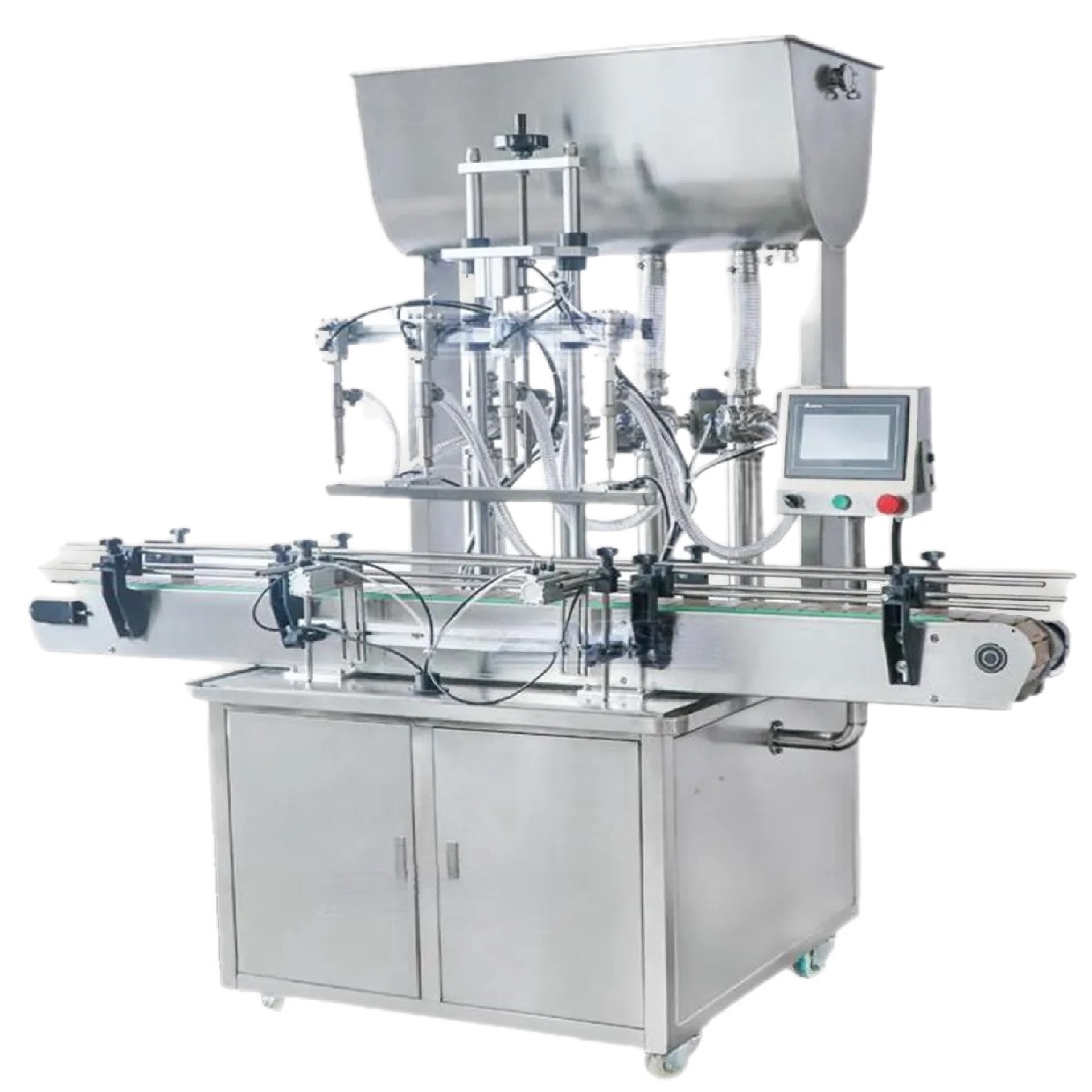
A piston filler draws product into a dosing chamber and displaces it through the outlet. It is a common starting route for products from pourable liquids to creams and pastes. The cylinder must be correctly sized: operating too close to the minimum can reduce useful adjustment, while a chamber that is too small may require several strokes for one bottle.
Questions to test
- Can the valve and nozzle pass the largest particle?
- Does the product trap air during the suction stroke?
- Will the hopper maintain a consistent feed?
- Does the nozzle stop strings or trailing product cleanly?
- How quickly can the cylinder, valves and hopper be cleaned?
Peristaltic filling
The product remains inside flexible tubing as rollers move it towards the nozzle. This can simplify the wetted path for suitable liquids and enables electronic dose control. Tubing is a functional machine component: its material, bore, wall thickness, compression and service life directly affect performance.
Pump filling
Gear, diaphragm, lobe and other pumps each have different operating envelopes. The pump should be selected from the formulation, not from the generic word “liquid”. Consider priming, suction lift, pressure, dry-running risk, shear, solids, solvent compatibility and the planned clean-down method.
Fill-to-level filling
Overflow and vacuum systems are chosen when bottles should present the same visible liquid level. They are not automatically a substitute for controlled volume. Bottle rigidity and neck consistency are central to performance.
Nozzle design can change the result
Fixed nozzle
Simple and compact where splash, foam and bottle neck geometry permit.
Diving nozzle
Moves into or with the bottle to control foam, splash and product placement.
Positive shut-off
Closes near the tip to reduce strings or drips from suitable products.
Overflow nozzle
Seals at the neck and sets the target fill level in rigid bottles.
How to compare trials
Use the same product batch, temperature, bottle set and measurement method. Record fill amount, cycle time, rejects, foam settlement, drips, bottle contamination, start-up waste and cleaning time. A short attractive video is not an acceptance test.