
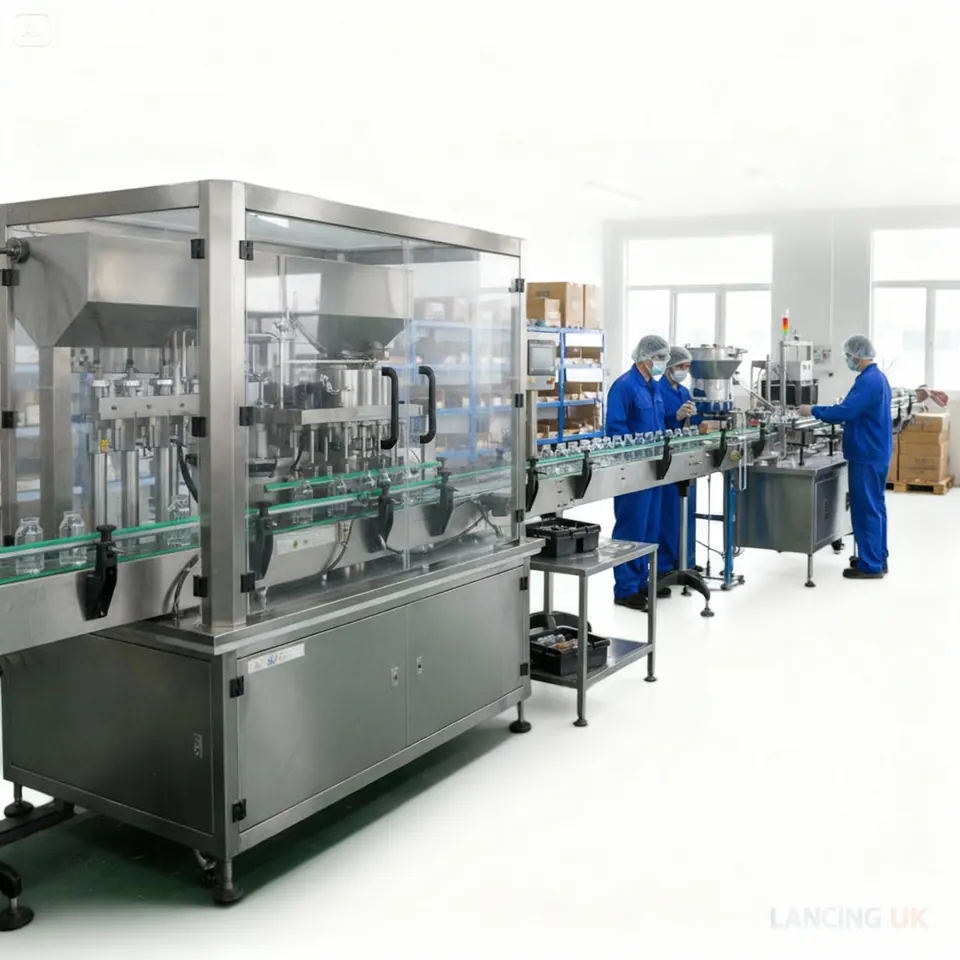
One bottle journey
Design the changeover across the line, not machine by machine
A bottle format change can affect infeed, rails, sensors, filling nozzles, closure tooling, label settings, inspection and accumulation. When each machine is adjusted independently, production can lose time finding the interface that was missed. Use one pack matrix and one controlled changeover sequence.
Create the pack matrix
List every bottle, closure, label and case combination that must run. Identify the smallest opening, tallest bottle, lightest empty pack, widest diameter, least stable base and most difficult closure. This matrix defines the representative formats for design and acceptance.
| Line area | Changeover and handling checks |
|---|---|
| Bottle infeed | Orientation, bulk handling, manual loading, spacing, accumulation and the condition of empty bottles. |
| Conveyors and guides | Working height, width, rail contact, transfer gaps, speed range and support for unstable packs. |
| Filling position | Sensor target, stop or gate, pitch, nozzle alignment, insertion depth and release logic. |
| Closure application | Cap or component feed, bottle restraint, tooling, torque or application settings and reject route. |
| Downstream stages | Sealing, coding, label recipe, inspection, accumulation and finished-pack discharge. |
Recipes and mechanical changes
A saved recipe can recall speeds, delays, positions and setpoints, but it cannot replace every physical adjustment. Record which items are automatic, tool-less, adjusted with a scale, exchanged as change parts or verified manually. Clear identification and storage reduce the risk of fitting a similar but incorrect component.
Sensors, stops and pucks
Transparent, reflective, dark or unusually shaped packs may require a different sensor target or mounting position. Stops and gates must hold the bottle without deformation or tipping. Pucks or nests can stabilise difficult containers, but they create their own infeed, return, storage and changeover requirements.
Line clearance and first-off approval
The changeover is not complete when the mechanical parts are fitted. Remove previous product and components, confirm the correct recipe, prime or calibrate the filler, verify closure and label settings, and approve first-off packs before sustained production. Record who performs each step and what evidence is retained.
Acceptance scenarios
- Run the least stable and most difficult pack combinations
- Demonstrate normal infeed, accumulation and discharge
- Stop and restart with bottles at representative line positions
- Test blocked and starved signals between machines
- Complete a documented format change and first-off check
- Measure sustained accepted output at the agreed discharge point