
Direct answer
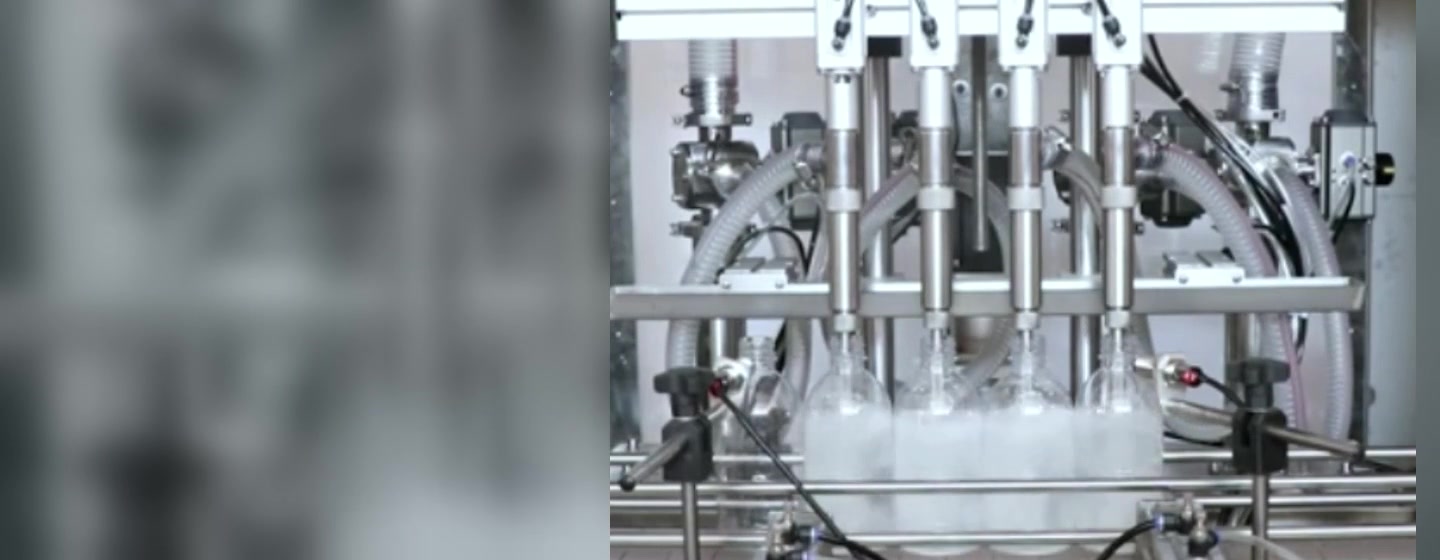
A filling nozzle is the controlled interface between the product path and the production bottle
The nozzle must pass the required product without unacceptable restriction, enter or align with the bottle safely, control splash and foam, stop cleanly and release the bottle in a suitable condition for capping or the next operation. Nozzle selection therefore cannot be separated from bottle handling or the dosing principle.
| Selection input | What it changes | Evidence to provide |
|---|---|---|
| Product behaviour | Bore, internal path, shut-off method, fill profile and cleaning route | Production product at normal filling condition |
| Bottle opening | Maximum outside diameter, insertion depth and alignment tolerance | Neck drawing plus representative bottles |
| Foam or splash | Free-fall distance, diving movement and flow stages | Video or trial observation under representative flow |
| Drip or stringing | Positive closure, suck-back, tip design and delay before bottle release | Filled-bottle neck and conveyor condition |
| Particles | Minimum product path and valve/nozzle geometry | Largest and most difficult normal particles |
What does a bottle filling nozzle actually do?
A bottle filling nozzle starts and stops product flow at the container and shapes the final part of the product path. Depending on the machine, it may also move vertically, seal against a neck, vent displaced air, return overflow or close positively at the tip. The term “nozzle” therefore covers more than a simple open tube.
Specify the required result—quantity, visible level, clean neck, limited foam and acceptable cycle—before choosing a tip style. A nozzle that flows quickly into one bottle may be unsuitable for a narrower neck or a product that continues to string after flow stops.
When should the nozzle move down into the bottle?
A nozzle should move into the bottle when reducing free fall or controlling the point of discharge materially improves splash, foam, aeration or placement. The movement may start near the base and rise with the product, or use a shorter insertion followed by staged withdrawal. The correct profile depends on the real formulation and bottle.
Diving movement also creates constraints. The bottle must be centred, the nozzle must clear normal neck variation, and the withdrawal must not contact product or pull a string across the neck. Trial the smallest opening and least stable bottle.
How do positive shut-off and suck-back control differ?
A positive shut-off closes the product path at or near the nozzle tip. Suck-back briefly reverses or relieves the product column to draw a hanging drop or string away from the outlet. Either method can improve cut-off, but neither automatically solves an unsuitable product path, excessive pressure or delayed product relaxation.
The setting should be assessed against dose result, trapped air, stringing and cleaning. Excessive suck-back can introduce bubbles or disturb a measured dose; inadequate closure can leave product on the bottle neck or conveyor.
How is nozzle-to-neck clearance specified?
Nozzle-to-neck clearance is specified from the actual outside nozzle size, bottle opening, positional tolerance, bottle movement and required insertion depth. Nominal drawing dimensions are only the starting point because moulded bottles can vary and empty containers can lean or flex under guide pressure.
Provide a neck drawing and samples from normal production. The trial should show entry, filling and withdrawal without contact at the intended indexing condition. If clearance is too small, dedicated support, a smaller nozzle or a different fill approach may be required.
When is a staged fill profile useful?
A staged fill profile is useful when one constant flow rate creates splash, foam, turbulence or an unstable finish. The cycle may start slowly, increase through the main fill and slow again near the target. In other applications, the early stage can be faster and the final stage controlled for cut-off or weight approach.
Each stage adds settings that must be transferred between recipes and rechecked after changeover. Use the fewest stages that reliably produce the accepted bottle.
What should a nozzle trial prove?
A nozzle trial should prove that the product enters every representative bottle without contact, unacceptable splash, foam, stringing or delayed drip; that the required quantity or level can be verified; and that the neck and bottle exterior remain suitable for the next operation. It should also record the product condition, nozzle geometry, movement and settings used.
- Smallest neck and least stable bottle
- Minimum, normal and maximum fill where applicable
- Normal start, steady cycle, planned stop and restart
- Neck, thread, label panel and conveyor condition
- Cleaning and removal method for the selected nozzle