
Direct answer
Net-weight filling measures the product in the bottle, so stable weighing and controlled product flow are equally important
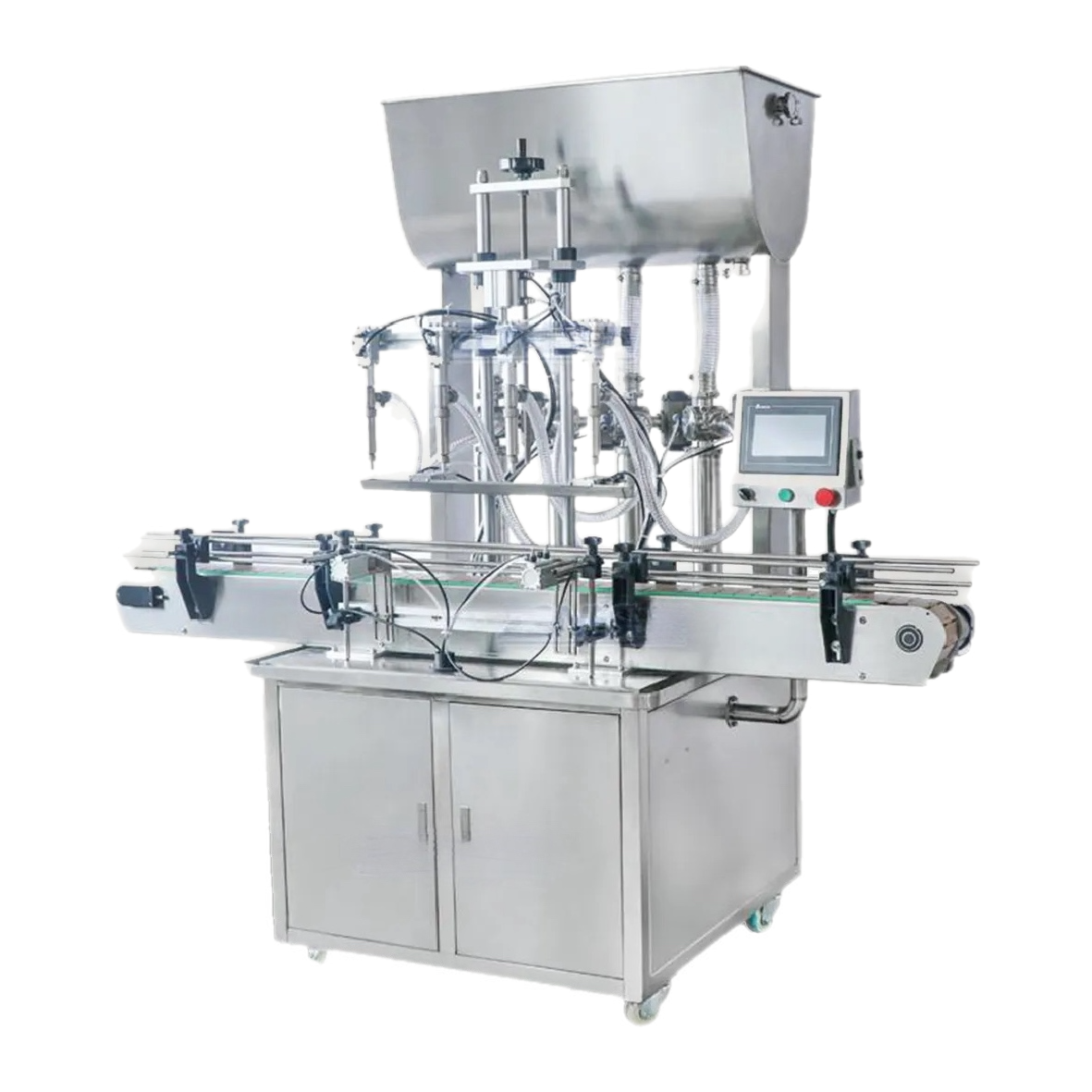
A net-weight bottle filling machine supports the container on a weighing system, establishes or confirms tare and controls product flow until the target mass is reached. The principle can be valuable when mass is the preferred production measure, when density may make volumetric interpretation less convenient, or when a project needs a direct filled-weight record. It is not simply a scale underneath an ordinary filler: the bottle, nozzle, hoses, guides, conveyor and surrounding vibration must all be designed not to disturb the measurement.
Distinguish gross, tare and net values
Gross weight includes the bottle and product. Tare is the empty bottle and any allowed fixture effect. Net weight is the product mass calculated from the agreed tare method. If bottles vary materially in empty weight, a fixed nominal tare can create a different result from an individual tare cycle. The project brief should state which approach is required and how rejected or unstable readings are handled.
| Weighing issue | Why it matters | Project check |
|---|---|---|
| Bottle tare variation | Changes the calculated net content if tare is assumed rather than measured | Weigh a representative empty-bottle sample across suppliers or moulds |
| Mechanical contact | A guide, nozzle or hose can bypass force around the load cell | Observe the complete fill cycle and confirm free, repeatable bottle support |
| Vibration and airflow | Conveyors, pumps, nearby equipment or air movement can delay a stable reading | Test in the intended machine layout and operating state |
| Product in flight | Product still travelling after valve closure can cause overshoot | Define coarse/fine feed, cut-off timing, nozzle retention and settle time |
| Residue and drips | Product on the neck, bottle exterior or support changes presentation and may affect checks | Inspect the bottle after transfer and before capping or labelling |
Coarse and fine feed control the approach to target
Many weight-filling projects use a faster initial feed followed by a slower final approach. The split point and cut-off response depend on product flow, pressure, valve and nozzle behaviour, the target mass and product still moving through the path. A formulation that surges, aerates, strings or drains slowly needs a different control profile from a stable free-flowing liquid. Trial the minimum and maximum fills because the best approach settings may not scale linearly.
The bottle must be mechanically quiet on the weighing station
Check base shape, moulding flash, flexible panels, tall narrow geometry and whether the bottle rocks when empty. Automatic conveyors may need controlled lifting, isolation or transfer so the bottle is supported consistently during weighing. A nozzle that remains in contact with the neck, a hose that pulls on the frame or guide rails pressing on the bottle can alter the reading. The design should also prevent product impact from destabilising an empty lightweight pack.
Use mass and volume language consistently
A target in millilitres is not automatically the same as a target in grams. Converting requires product density at a defined condition, and density can change with temperature, entrained air or formulation. If the commercial requirement is mass, specify mass. If the pack is sold or accepted by volume, define the volumetric method and use weight only as an agreed proxy when the relationship has been established.
Plan automatic line integration around weighing time
On an automatic system, the fill station needs enough time to tare, fill, settle and make a decision before releasing the bottle. Upstream accumulation, bottle gating and downstream capacity should be balanced around this cycle. The accepted output should be measured as good bottles over the agreed period, including normal starts, stops and replenishment—not calculated from valve-open time alone.
Verification and legal-metrology boundaries must be agreed by the project owner
The website provides machinery-selection guidance, not legal-metrology certification. Where weight is used for a regulated commercial declaration or production-control decision, obtain competent advice on the applicable measuring-instrument, verification, sampling, record and package-control requirements. The machine quotation should state what weighing components and records are included and what remains a site responsibility.