
Direct answer
Gravity filling is a practical route when the product flows predictably and the bottle can be presented consistently
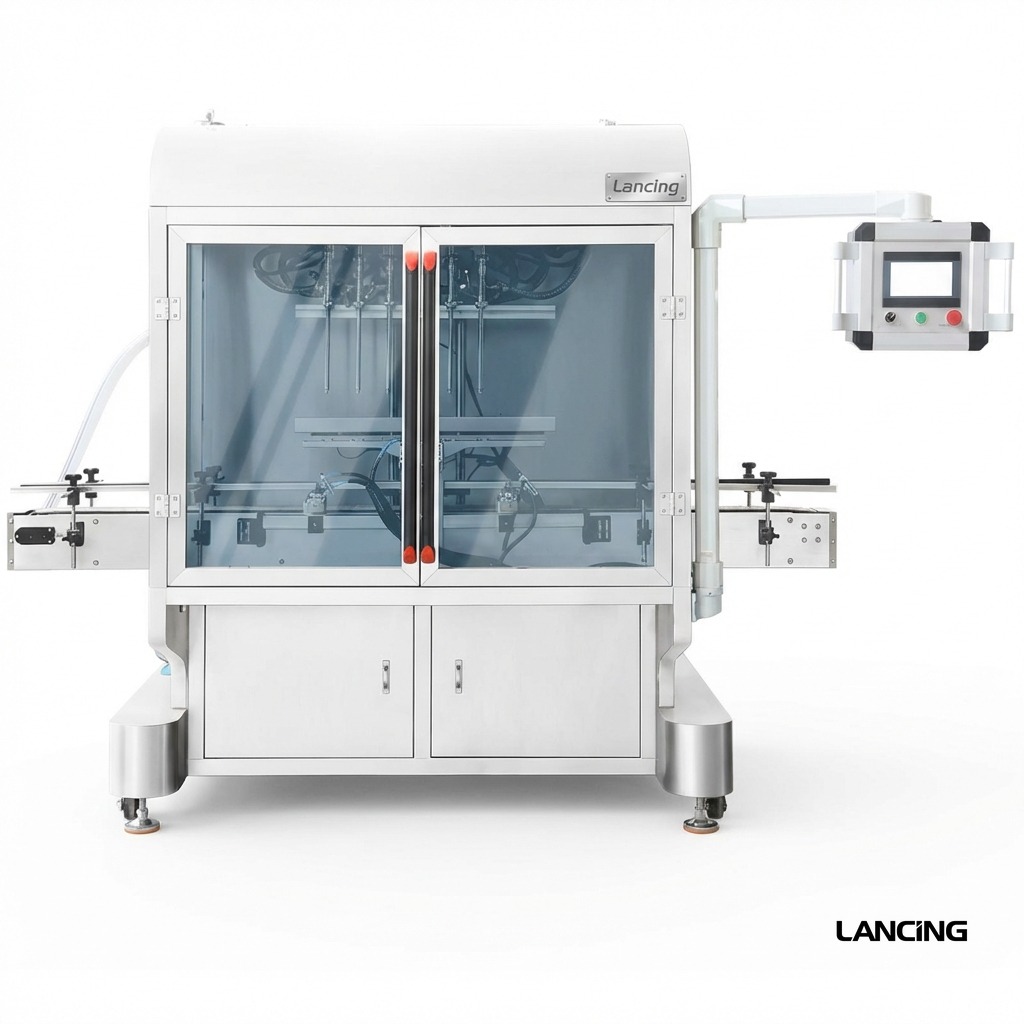
A gravity bottle filling machine uses an elevated or otherwise controlled product supply so liquid can move to the nozzles without a positive-displacement dosing pump doing all of the work. The machine still needs a defined method for starting and stopping flow, maintaining the supply condition, locating the bottle and controlling the final cut-off. It is therefore best treated as a complete product-and-pack system rather than simply a tank above a set of nozzles.
Gravity filling is commonly considered for suitable free-flowing still liquids. The final decision depends on viscosity at the real filling temperature, foam and aeration, particles, chemical compatibility, required quantity or visible level, bottle neck access and the production rate. Carbonated or pressure-sensitive products normally require a purpose-designed pressure-filling route rather than a standard atmospheric gravity filler.
Separate gravity delivery from the way the fill is measured
The term “gravity filler” can describe more than one control approach. A time-controlled or valve-controlled system meters flow for an agreed condition. A fill-to-level system may also use gravity as part of the product supply, but it determines completion from the liquid level or return path. These routes answer different acceptance requirements.
| Project requirement | Gravity route to assess | Evidence needed |
|---|---|---|
| Repeatable dispensed quantity | Timed, valve-controlled or other metered gravity arrangement | Product condition, supply head, flow stability and measured filled quantity |
| Consistent visible shelf level | Fill-to-level overflow or vacuum route where the bottle is suitable | Bottle rigidity, neck seal, internal volume variation and target level |
| Foaming product | Controlled entry, staged flow or diving-nozzle arrangement | Representative product, headspace, foam rise and acceptable settling time |
| Multiple bottle formats | Adjustable or change-part-controlled machine format | Full bottle matrix, neck positions, heights, stability and changeover sequence |
Product behaviour sets the usable operating window
Record the product at the lowest and highest normal filling temperatures because flow can change materially with temperature. Note whether the liquid entrains air, forms persistent foam, contains suspended material, crystallises, dries on exposed surfaces or attacks common seal and tubing materials. The whole wetted path—including tank, hoses, valves, seals and nozzles—must be compatible, not only the visible filling head.
Product supply also matters. A changing tank level, intermittent transfer pump, air entering the feed, inconsistent return flow or product agitation can alter the condition reaching the nozzles. The quotation should state how product arrives at the filler, how the operating level is maintained and how the line is drained or cleaned.
The bottle must stay located while liquid enters
Lightweight, tall or narrow-base containers can move as the nozzle approaches or as liquid hits the base and wall. Guide rails, bottle stops, neck guides, pucks or a shaped fixture may be required. Confirm the smallest opening, shortest and tallest bottle, shoulder geometry, wall flexibility and the space around the closure finish. The bottle should leave the station with a clean neck and outer surface suitable for capping, labelling or inspection.
Choose the automation level around the whole cycle
Operator-loaded
Useful for controlled batches where the operator presents bottles and can observe the fill. Include bottle support, ergonomic loading and the rhythm needed to achieve good output.
Multi-head semi-automatic
Several bottles may be filled together while remaining manually loaded and removed. Head spacing, bottle consistency and safe access become important changeover factors.
Automatic inline
Conveyorised filling adds bottle detection, gating, no-bottle/no-fill logic, tank-level control, reject decisions and coordination with downstream equipment.
Trial the hardest normal combination
- Product at the normal warmest and coolest filling conditions
- Smallest bottle opening and least stable empty container
- Minimum, normal and maximum fill settings
- Start-up, steady production, planned stop and restart
- Tank replenishment or product-supply interruption
- Neck cleanliness, drip behaviour and downstream bottle presentation