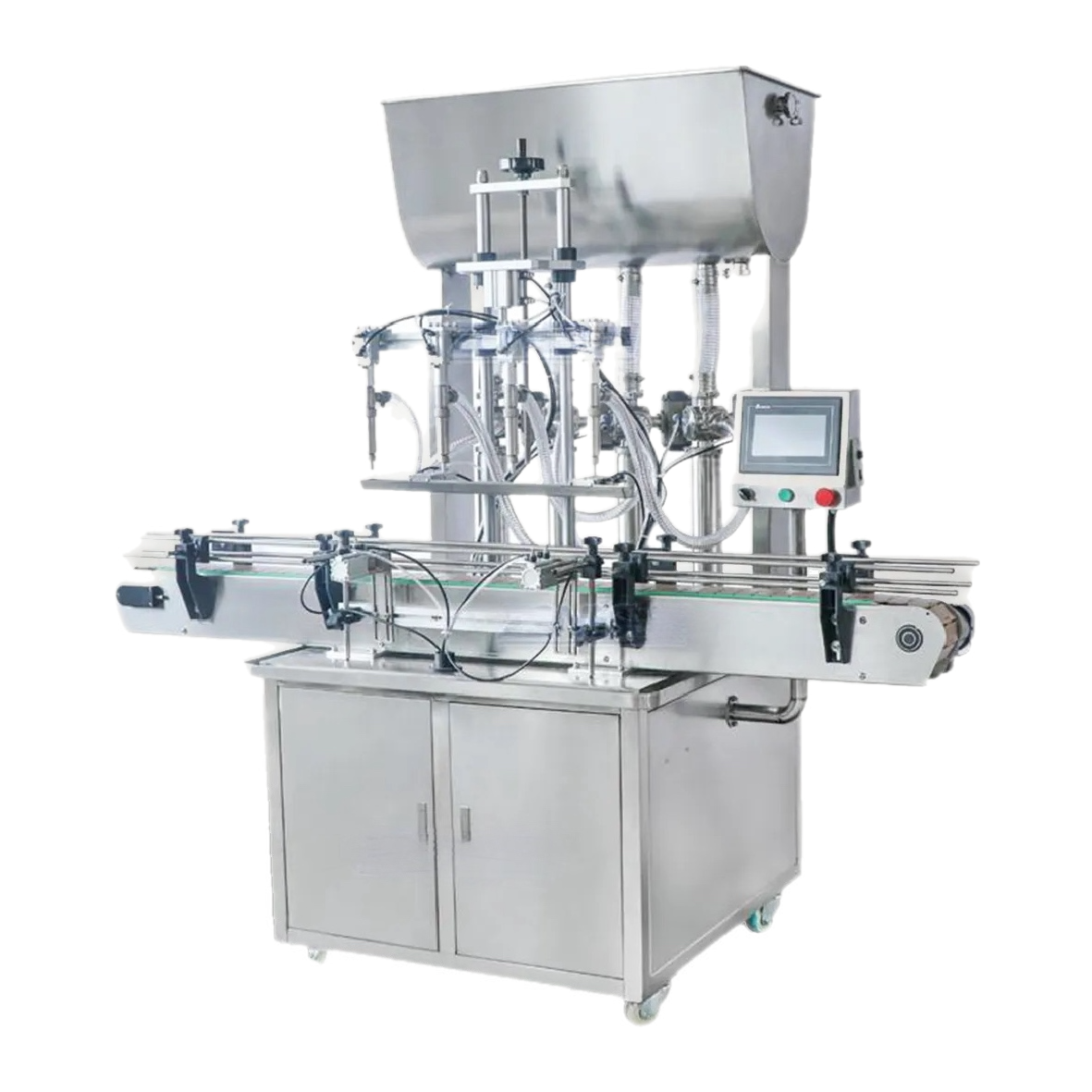
Bottle filling machinery • Engineered and supplied by Lancing Ltd

Bottle material guide

How Do PET, HDPE and Glass Bottles Affect Filling Machine Selection?

Bottle material changes the way a container stands, flexes, heats, transfers and presents its neck to the filling nozzle. The filler should be selected around the real production bottle rather than volume alone.

Automatic bottle filling machinery with bottles on a conveyor

Direct answer

Bottle material affects handling, not just chemical compatibility

PET, HDPE and glass bottles can all be used on bottle filling machinery, but they do not behave the same way. The machine must control the real bottle's base, sidewalls, neck and centre of gravity through infeed, filling, discharge and stops. Material choice also affects heat tolerance, squeeze behaviour, static, surface marking risk and the kind of guides or pucks that may be needed.

Container behaviour to investigate during filling trials
ContainerTypical machinery considerationWhat to verify
PETLightweight bottles can move or flex when guides, air flow or nozzle contact are not controlledBase stability, neck location, wall movement and intended temperature
HDPESqueezable walls and moulded shapes can change how the bottle is side-guided and indexedPanel stiffness, base flatness, neck position and product compatibility
GlassRigid bottles provide repeatable geometry but need controlled transfer to reduce impact and breakage riskBase and neck tolerances, contact points, conveyor transfers and closure interface

Does bottle weight affect filling machinery?

Yes. Very light empty bottles can be disturbed by conveyor acceleration, air movement, guides or nozzle contact, while heavier glass bottles create different transfer and accumulation loads. The line trial should include empty, partly filled and full bottles because stability changes through the fill cycle.

Why does the bottle neck finish matter before capping?

The neck finish determines where the nozzle can enter, how close it can approach the opening and how the closure will later locate and seal. Small changes in neck height or concentricity can affect nozzle centring and capping, so the full bottle-and-closure set should be treated as one format.

Review the filling-to-capping neck interface.

Can one filling line run PET, HDPE and glass bottles?

It can be possible when the formats fall within the machine's physical and process range, but guides, change parts, sensors, nozzle positions and conveyor settings may differ. A line should be specified against a format matrix showing every bottle, closure and fill range rather than a single representative pack.

Plan bottle changeover and conveyor handling.

Which bottle material is best for hot filling?

There is no universal best material. The chosen bottle and closure must be approved for the intended product, fill temperature and cooling process. Where hot filling is required, obtain thermal guidance from the packaging supplier and trial the actual production container through filling, capping and cooling.

Read the hot-fill machine selection guide.

Build a bottle-format matrix before quotation

  • Bottle material and supplier reference
  • Overall height, width and base dimensions
  • Neck finish, opening and closure
  • Empty and filled stability
  • Minimum, normal and maximum fill
  • Any intentional squeeze or panel flexibility
  • Temperature at filling and after filling
  • Label area or surface that must not be marked

Use the most difficult bottle in the trial

Do not trial only the easiest pack. Include the lightest bottle, narrowest neck, least stable base, highest fill and most demanding closure where those exist in the range. That exposes format limits early and helps define change parts honestly.

Plan representative bottle filling trials.

Send the actual PET, HDPE or glass bottles.

Lancing can review bottle stability, neck access, filling principle and line handling before a machine is shortlisted.

Need help selecting a filler? Send your product, bottle, fill range and target output. Ask Lancing for a practical machine shortlist.
Request a quoteCall