Viscosity
Measure the range at production temperature, not only a laboratory value at one condition.

Foaming liquid applications
Shampoo, hand wash and detergents can foam, string, trap air and vary in viscosity. The filler must control product supply, nozzle movement, bottle stability, neck cleanliness and pump or trigger closure handling.
Direct answer
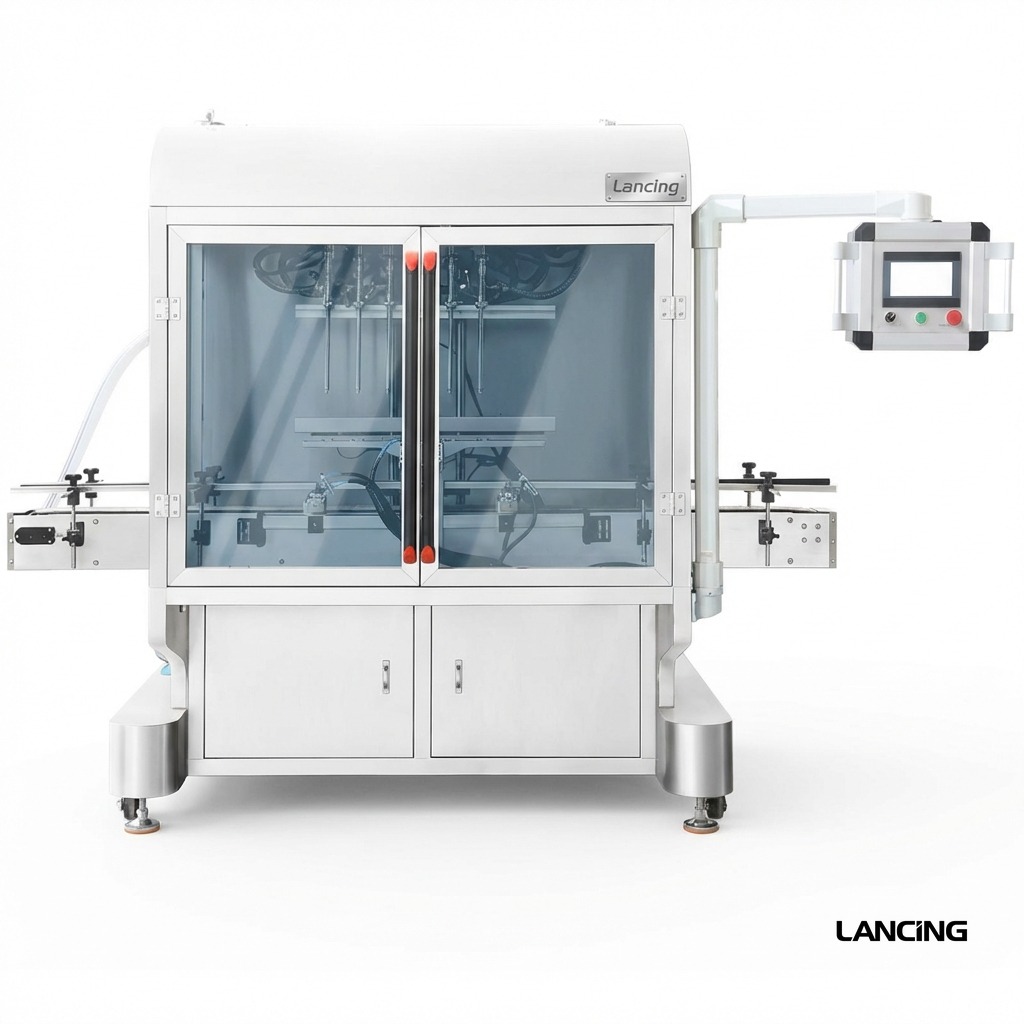
Piston, diaphragm-pump, gear-pump or other controlled liquid filling systems may suit shampoo and detergent. The selection depends on viscosity, foam, stringing, particles, dose, bottle neck, required output and cleaning. Diving nozzles and staged flow are often assessed when foam or splash limits production.
Product behaviour
Surfactant products can hold air introduced during mixing, transfer or filling. The machine trial should separate supply-related aeration from foam generated at the nozzle.
Measure the range at production temperature, not only a laboratory value at one condition.
Assess existing entrained air, nozzle impact, headspace and the time needed before capping.
Thicker formulations may form tails at cut-off, affecting the bottle neck and label area.
Density and air content matter when fill verification is based on mass or when formula conditions vary.
Machine selection
The starting point should remain open until the product and bottle evidence rules out less suitable methods.
| Route | Where it can fit | Trial focus |
|---|---|---|
| Piston filler | Viscous or medium-viscosity products needing a selected volumetric dose. | Valve path, stringing, particles, nozzle cut-off, cylinder range and cleaning. |
| Diaphragm pump filler | Suitable liquids requiring controlled pump flow and independent nozzle settings. | Flow stability, compatibility, foam, air handling and repeatable cut-off. |
| Gear pump filler | Pumpable liquids where controlled rotation can meter a repeatable dose. | Product shear, pump materials, minimum stable dose, suck-back and cleaning. |
| Gravity or overflow route | Readily flowing products where controlled head or visible level is the priority. | Foam, level presentation, bottle rigidity, supply head and overflow recovery. |
Filling profile
The most useful fill profile is established by testing the product at normal production conditions.
Confirm nozzle diameter and clearance so the bottle can be filled without contact or misalignment.
A controlled initial flow can reduce impact at the base and establish a product pool around the nozzle.
Increase flow only while the product remains stable, coordinating nozzle withdrawal with the rising liquid.
Reduce flow near target, control suck-back or shut-off and allow the nozzle to clear before bottle movement.
Bottle and closure
Residue around the neck can interfere with closure application, torque, induction sealing, label adhesion and pack presentation.
Product supply
Mixing, recirculation and transfer pumps can create the foam later seen at the nozzle. Review the complete route from source vessel to filling head.
Check suction leaks, splashing returns, pump speed and pipe restrictions that can entrain air or disturb the formulation.
Viscosity may change across a batch if product temperature is not representative or stable.
Tank level and refill timing should not create pressure or head changes during critical filling stages.
Plan product supplyBuyer questions
The best filler depends on viscosity, foam, dose, bottle neck, output and cleaning. Piston, diaphragm-pump and gear-pump systems are common starting routes, but representative product and bottle trials should decide.
Not always. Diving nozzles are useful when bottom-up or staged filling reduces foam, splash or product on the neck. A narrow bottle or different formulation may require another nozzle strategy.
Air can enter during mixing, transfer, recirculation, suction leaks or tank refill. Inspect the product-supply route and product condition before changing only the nozzle settings.
Yes, but long dip tubes, orientation, insertion and pre-start torque must be tested with the real bottle. Clean filling and controlled transfer are necessary before closure placement.
The method depends on formulation, wetted materials and cross-contamination limits. Define drain-down, product recovery, dismantling, cleaning media, rinse capture and inspection before the machine is specified.
Product flow, foam control, dose, nozzle movement, bottle indexing, settling, closure handling and downstream line balance all affect good output. Measure accepted finished packs in a representative run.
Send representative product, bottles, closures, dose range, output and cleaning needs for a practical machine shortlist.